What happens after the bombs drop: Scientists reveal the terrifying global aftermath of nuclear war
By Rob Waugh
Daily Mail
Mar 21, 2026
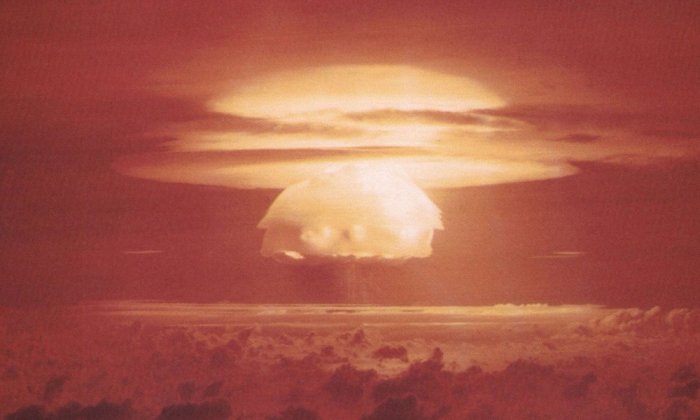
As the threat of a nuclear war intensifies, the terrifying reality of what could happen after the bombs explode may cause more fear than the initial cataclysm.
For decades, worst-case scenarios have projected that tens of millions could perish within minutes as nuclear warheads struck major metropolitan areas such as New York, Washington, Chicago and Los Angeles.
However, each of those fireballs have long-lasting consequences for the planet and everyone within range of their deadly radiation clouds.
Scientific research has suggested that the conditions caused by a series nuclear detonations around the planet would be catastrophic for human health, the environment and almost all other living organisms that some might consider being vaporized in the atomic blast a less painful fate.
Specifically, years of studies on the effects of nuclear explosions and the ensuing fallout have found that such a war, even an isolated conflict, would burn away the ozone layer, spread disease from unburied corpses and expose millions to a fatal illness called Acute Radiation Syndrome.
The Bulletin of Atomic Scientists, a Chicago-based nonprofit that created the infamous Doomsday Clock, warned in January that the world has never been closer to total annihilation.
Recent events have only moved that timeline further along, with the war in Iran threatening to spiral out of control as nuclear-armed Russia has allegedly begun supplying Iran with military intelligence on US forces.
Meanwhile, the last remaining nuclear arms treaty between the US and Russia, called New START, officially ended on February 5, leaving no barriers on either nation's ability to build and test weapons of mass destruction.

The US, Israel, Iran, and Russia have all warned that a catastrophic global war could be nearing as the crisis in the Middle East escalates (Stock Image)

The 'Ivy Mike' nuclear test on November 1, 1952 (Pictured) was one of the largest surface detonations ever, completely destroying Elugelab Island in the Marshall Islands
Diseases ravage the planet
Following a nuclear war, diseases such as salmonella, dysentery, typhoid, malaria, dengue fever and encephalitis would spread widely among the survivors, according to a 1981 report in the New England Journal of Medicine.
Not only would survivors not have clean water, but insects would multiply rapidly, feeding on the corpses littering the streets.
Along with untreated sewage carrying more diseases, the rise of trillions of radiation-resistant insects would allow these pathogens to be carried from dead humans and animals to those who still living around the globe.
Medical equipment running on electricity may also be useless without generators in areas struck by blackouts.
A 1986 report entitled The Medical Implications of Nuclear War warned: 'Many familiar barriers to the spread of communicable disease... will be seriously compromised in the post-attack environment In their absence.'
'A host of enteric diseases not yet encountered by most Americans may be expected to spread widely,' the report continued.
According to the National Library of Medicine, these illnesses would include hepatitis, a viral liver infection that can cause inflammation and jaundice, and E. coli, a potentially fatal bacterial gut infection often leading to severe diarrhea, cramps and dehydration.

The idea of 'nuclear winter' first came to the world's attention in an article by scientist Carl Sagan in 1983 (Stock Image)

Russia's Sarmat-2 intercontinental nuclear missile, in a successful test launch on April 20, 2022
The ‘ultraviolet spring’
Nuclear war could strip away the ozone layer, leaving survivors to be blasted by cancer-causing ultraviolet radiation from the unfiltered sun. The sun’s intense rays could also kill off much of the remaining food supply.
Researchers first realized in 1970s that nuclear fireballs would produce nitrogen oxides, which would be carried high into the stratosphere and chemically destroy ozone molecules.
A 1975 study by the National Academy of Sciences, nuclear explosions could reduce the ozone layer by up to 70 percent in an all-out nuclear war where 10,000 megatons of weapons detonated.
However, that amount of damage is far beyond what the combined nuclear arsenals on Earth currently possess.
John W. Birks of the University of Colorado wrote: 'Once most of the smoke and dust was removed from the atmosphere and sunlight began to break through, the biosphere would not receive normal sunlight but, rather, sunlight highly enriched in ultraviolet radiation.'
The resulting increase in UV-B radiation would cause more skin cancers among surviving humans, and also have devastating effects on crops and wildlife.
Recent research suggested that the effects of even a ‘small’ nuclear war between, such as a hypothetical conflict between India and Pakistan, could potentially destroy up to 40 percent of the ozone layer.
Michael Mills, chief study author from CU-Boulder’s Laboratory for Atmospheric and Space Physics said: 'We would see a dramatic drop in ozone levels that would persist for many years.'
'At mid-latitudes the ozone decrease would be up to 40 percent, which could have huge effects on human health and on terrestrial, aquatic and marine ecosystems.'

Tests of early US nuclear weapons during the Manhattan Project in World War II
The ‘black rain’
In Hiroshima, Japan, fires created by the first atomic bomb dropped in World War II carried ash and radioactive material into the clouds. The result was 'black rain,' which falls with an oily consistency almost like tar.
The rain fell on the city in the hours after the bomb exploded, leading to severe radiation burns in some cases.
The effects of the weather on radiation can be unpredictable, with the 1953 Nevada bomb tests leading to 'hot spots' where large amounts of radiation lurked.
Researchers from the Massachusetts Institute of Technology have found that lethal amounts of fallout could spread hundreds of miles from the site of an explosion.
Fallout is the radioactive dust and particles that fall back to Earth after a nuclear explosion. Carried by wind, it can mix with dirt or debris from the blast site and contaminate everything it touches.
Researchers writing in The Medical Implications of Nuclear War suggested that up to seven percent of the US could be covered in enough fallout to deliver a dose of radiation large enough to kill within two days.

Black rain fell on the victims of the US atomic bomb attack on Hiroshima, Japan in 1945
Global starvation
Up to five billion are projected to die of hunger after a full-scale nuclear war.
Soot from burning cities would soar high into the air, encircling the planet. The vast cloud of smoke would rapidly cool the planet, reflecting sunlight back into space.
This would cause crops to wither and make it impossible to plant those same foods at least for the next year, according to a 2022 Nature study.
Firestorms would kill people even in bomb shelters
Doomsday preppers and other survival experts have long noted that the safest place to be during a nuclear attack is in a well-shielded fallout shelter or some type of underground basement.
However, scientists have argued that those in shelters could actually be killed by the fires started in the explosions.
Collapsing buildings and ruptured fuel tanks or gas lines could combine to ignite what researchers called a 'firestorm.' This type of 'fire wind' would rapidly rise to gale force, blowing inwards from all directions.
The research in the Journal of Public Health Policy suggested that even in bomb shelters and basements, temperatures would rapidly rise to fatal levels during the firestorm on the surface.
The fire would completely consume available oxygen, the researchers added, meaning that those who were not burnt to death would suffocate.


1 comment:
Doom and Gloom!
Post a Comment