On Monday, American General Charles
Brown, chairman of the Joint Chiefs of Staff, participated in a tour of
the Israel-Lebanon border. Although this is only the second time Brown,
the highest-ranking officer in the US armed forces, has visited Israel,
he seemed to feel at home here. Brown's host was IDF Chief of Staff Lt.
Gen. Herzi Halevi. In photos distributed by the IDF Spokesperson's
Unit, the two can be seen flying comfortably in a helicopter, listening
together to a briefing in the northern command operations room, and
sitting naturally side by side at the head of the General Staff table.
"It's almost as if the IDF has two chiefs of staff," says a former
senior military official.
The IDF does indeed have only one
chief of staff, but Brown's presence in Israel, and the way he was
received here, is a clear expression of the deep, unprecedented military
cooperation between Israel and the United States. "A military coalition
without a military coalition," is how a source in the defense
establishment defines it.
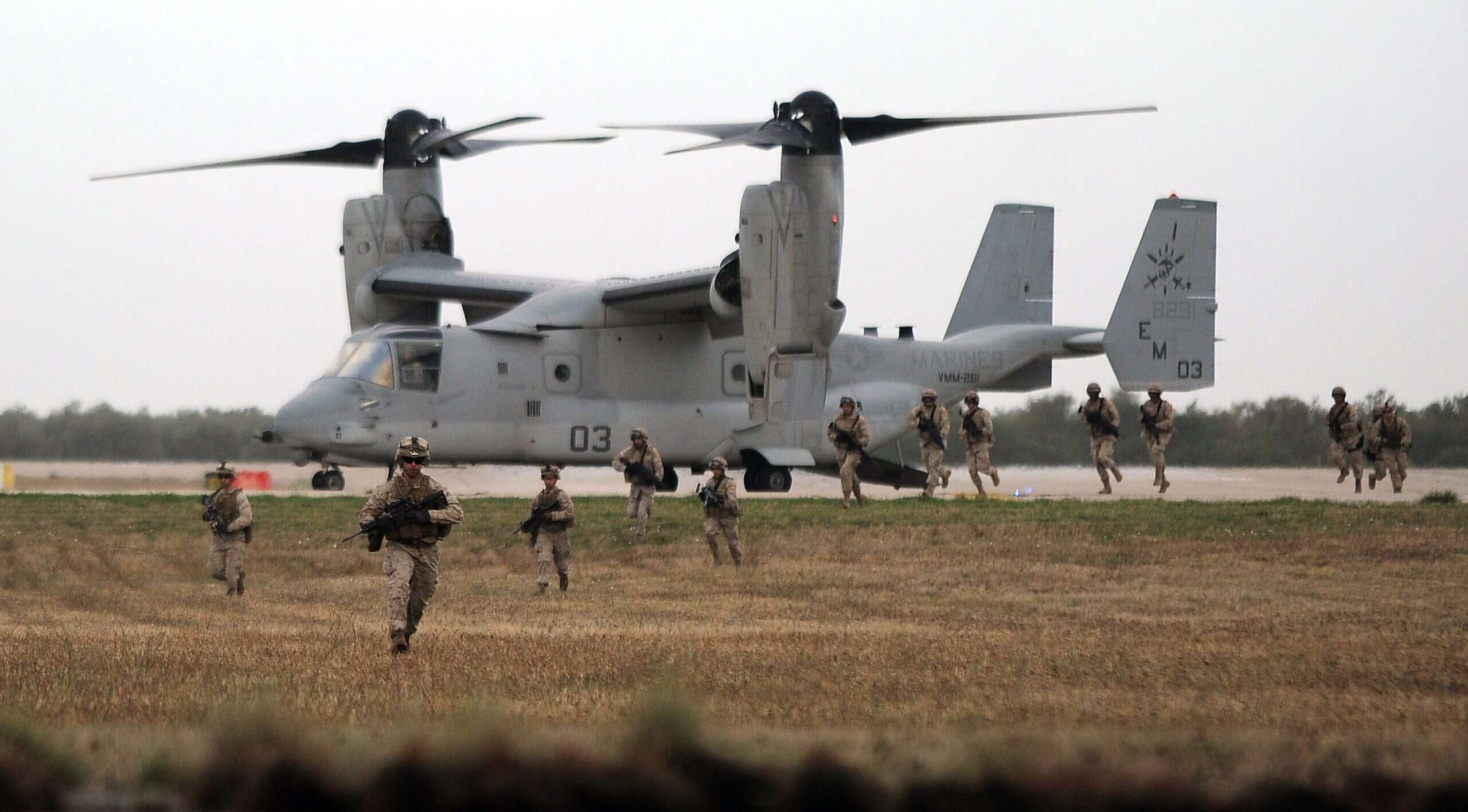
In the past three weeks, in the shadow of the alert for the Iranian regime's response to the assassination of Ismail Haniyeh in Tehran,
this "coalition" has reached its peak. During this period, the United
States Central Command, which oversees the Middle East region and is in
daily contact with the IDF, has grown tenfold in terms of its force
size: from a fighting force of 4,000 men in routine to about 40,000
fighters, with their equipment, including two aircraft carriers, a
nuclear submarine, and hundreds of fighter and reconnaissance aircraft.
"This time," says a source in the Defense Ministry, "America has gone
out of its way for us."
The reason for CENTCOM's
massive buildup, senior defense and political officials agree, is
solely related to Iran. "They didn't come here for Hezbollah," as one of
them puts it. The American declarations, from President Joe Biden
downwards, aimed at deterring Iran from attacking, were accompanied by
operational moves on the ground, which caused Israel's greatest enemy to
hesitate. And so, while the ayatollahs calculate their steps, the IDF
turned its attention to Lebanon.
Security and political sources in
Israel claim this week that the American deterrence had a decisive
contribution to halting the Iranian response, and that it allowed the
IDF to concentrate its efforts on the northern front, where a successful preemptive strike against Hezbollah's
missile and rocket launchers was carried out on Sunday. According to
the sources, the Americans were updated about the attack in Lebanon only
shortly before the event, mainly so they could prepare to defend their
many forces deployed in the area, and did not participate in it
themselves.
"We and the Americans are
coordinated," says Maj. Gen. (ret.) Yaacov Ayish, former military
attaché in Washington, "but it's not that we ask them for permission for
every offensive action we take. We update them so they understand the
significance of our moves, and take appropriate steps to protect
themselves and us. By the way, they don't update us on everything
either."
Ayish's words illustrate well the
delicate fabric of relations between senior IDF officials and CENTCOM,
two armies that have been working side by side in recent years and have
developed a unique shared language and brotherhood in arms. However,
this brotherhood has limits. For example, IDF officers meeting with
senior CENTCOM officials come to these meetings pre-briefed on the
information they can share – and vice versa. "It's a complex
relationship, with checks and balances, a lot of discretion, and also
personal friendships built over years and many joint exercises," says a
former senior IDF official who worked extensively with the US military.
"This is the infrastructure that enables long-term cooperation."
There's no doubt about the advantages
Israel receives from this infrastructure. "Israel is strong and
protects itself," Halevi said during the joint tour with Brown this
week. "Nevertheless, it's always good to have a strong ally by our
side." We saw a resounding testament to this in the "night of missiles"
in April when Iran launched a barrage of over 300 drones and missiles toward Israel, which was thwarted in a brilliant air operation led jointly by the IDF and CENTCOM.
However, the partnership with
CENTCOM, like any partnership, also has disadvantages. "When the US
president sends Brown here, he creates control and commitment," says a
former senior IDF officer who knows the political and strategic arena
well. "He forces the IDF to update him, he creates close monitoring of
the plans, and he understands what the mood is here. In the end, we're
talking about a superpower whose goal is control, and it thinks about
its own interests. In this relationship, the chief of staff gains, but
also loses some of his independence. He understands that there are
things he can't do because the Americans are around, and that if we
disobey those who are physically protecting us, we'll be in serious
trouble."
Unprecedented power
On Monday, August 12, IDF spokesman
Rear Adm. Daniel Hagari stood in front of the cameras. He did so
following persistent rumors circulating in Israel that Iran was planning
to attack in the coming hours. Hagari carried a reassuring message for
the tense Israeli public, but his words that evening were also directed
at another target audience. "We are monitoring what's happening
specifically against Iran with all our capabilities," he said, "We are
also not monitoring alone, but with the US and with additional
partners."
It was no coincidence that Hagari
waved the metaphorical American baseball bat several times during his
statement. On that tense day, US Defense Secretary Lloyd Austin
announced that he had ordered the nuclear submarine USS Georgia to be
sent to the Middle East, as part of the defense array against Iran. The
Georgia joined the battle group of the aircraft carrier Lincoln, which
includes destroyers, missile ships, and four fighter squadrons, already
on its way to the area. Here, the aircraft carrier Roosevelt awaited it,
including more than 4,000 marines and sailors, deployed in combat
formation alongside 12 additional warships.
If anyone had any doubt about
America's intentions, Biden came and expressed them in his own voice.
The day before Hagari's statement, Biden was caught leaving a church in
his hometown of Rehoboth Beach, Delaware. When asked what his message to
Iran was, the president responded with one word that has become
associated with him: "Don't."
The aircraft carrier Lincoln finally
reached its destination on Aug. 22 and was subordinated to CENTCOM. Two
days later, Brown arrived for a surprise visit to the Middle East, which
included meetings in Jordan and Egypt. It seems this was the last piece
in the puzzle that the IDF was waiting to complete. The next day, Aug.
25, about 100 Air Force planes took off for the strike in Lebanon.
Middle Eastern English
The American buildup in the region
was done in full coordination with the IDF. On Aug. 9, General Michael
Kurilla, commander of the Central Command, arrived in Israel for the
second time in a week for a meeting with Halevi. In parallel, meetings
were held between the heads of IDF branches and some of the General
Staff with their counterparts in CENTCOM. The deputy chief of staff and
coordinator of the connection with CENTCOM, Israeli Deputy Chief of
Staff Maj. Gen. Amir Baram, also met with his American counterpart for
coordination talks and intelligence updates. These numerous meetings
were coordinated by the Tevel Division in the IDF's strategy department,
responsible for liaising with foreign armies. "There's a close
operational dialogue here," says a senior military source, "they don't
just throw ships in the sea and planes in the air for no reason."
From the meetings between the
generals and admirals, operational guidelines flowed to the joint
working groups, at the level of brigadier generals and colonels, who
worked together to formulate action plans and divide areas of
responsibility. The conversations were held remotely, using encrypted
video systems, and sometimes face-to-face, in joint operations rooms.
These Israeli-American meetings, says a source who participated in them,
are conducted as equals, in an open manner and without unnecessary
formalities of respect. And yes, sometimes there are disagreements that
escalate into shouting.
The conversations between IDF
officers and CENTCOM are conducted, of course, only in English. "But
it's an English that understands the Middle East," says a source
involved in these conversations, "CENTCOM is the partner that's most
comfortable to work with. Suddenly you discover that there's someone
else is also studying Iran, who knows how the region operates. It's like
adding another body to the IDF, expanding its capabilities basket."
CENTCOM, by the way, also serves as a liaison body to other armies in
the region, those that operate in lockstep with Israel and the US but do
not maintain direct connections with the IDF.
"Cooperation with CENTCOM is a
strategic asset for Israel," says former head of IDF Military
Intelligence, Maj. General (ret.) Amos Yadlin. "Think about it: the US
has only seven aircraft carrier battle groups in total, of which only
three or four are operational at any given time. In other words, half of
the active American aircraft carriers are currently in our region.
There's no doubt that this is part of the reasons why the Iranians
decided to delay, and perhaps even cancel, their attack. From this
perspective, it's very important that they don't see only Israel facing
them, but also the US."
A Defense Ministry source adds,
"Putting another aircraft carrier here is a significant statement to the
region. America knows how to convey its messages well. The Americans
have superpower capabilities, and it's good that they're on our side."
However, the US not only has
superpower capabilities but also superpower interests. Alongside the
military meetings, diplomatic contacts were also held in recent weeks to
discuss these interests. Prime Minister Benjamin Netanyahu spoke on the
phone with Biden and met with Secretary of State Antony Blinken, who
also met with Defense Minister Yoav Gallant, who in turn maintained an
open channel with Austin. The defense minister's office also spoke with
Brett McGurk, the National Security Council's envoy to the Middle East,
and with Amos Hochstein, who was in charge of relations with Lebanon on
behalf of the administration.
What was sewn in these diplomatic
talks trickled down to the military level. Kurilla, who reports directly
to Biden, received his instructions from the administration in
Washington. Halevi received his instructions from Jerusalem. According
to sources familiar with the details, one of the instructions that
flowed from the Israeli political echelon to the IDF was to slightly
reduce the response against Hezbollah from what was originally planned.
"The Americans prefer the region to be quiet and without wars. That's
the starting point," explains a security source, "but they also
understand our need to defend ourselves. There's always an inherent
tension within this system."
Air defense commander Brig. Gen. Ran
Kochav, former spokesperson for the IDF said, "The United States of
America has been giving a masterclass in strategy here in recent weeks.
When they send aircraft carriers here, a nuclear submarine, the Chairman
of the Joint Chiefs arrives, Biden says 'don't' and everyone is busy
explaining to the Iranians and Hezbollah that they should be careful,
there's no doubt that it affects and deters, and to some extent helps to
'get them down from the tree'. But it's important to remember that the
US is doing all this from its own interests – preventing a regional war.
When Biden says 'don't' to Iran, he's also saying 'don't' to Israel."
According to Brig. Gen. (res.) Assaf
Orion, senior researcher at the Institute for National Security Studies,
"The US is our closest partner, with shared values and a similar – but
not identical view – of the problems – and of course differences in
policy. The IDF and CENTCOM are each subordinate to a different
government and serve a different policy. In some things, the interests
are shared, and in others, they differ. The threats on our borders, for
example, are much more severe in Israel's eyes than in the US's eyes.
Our approach is more offensive, and the US is a large power that doesn't
rush into conflicts. These are tensions that need to be managed."
When asked whether the IDF has to
make concessions to adapt to CENTCOM's interests, Orion says, "In life,
there are constraints. You can't tell the US 'put your credit card here
and send half an army here, back me in the UN and help me with
ammunition', without giving up something. Sometimes you need to argue
about things, but in the end, what the US gives us on the military,
security, and strategic level is priceless. When your current challenge
is dealing with Iran on its way to nuclear weapons and with all the axis
of resistance it has built around us, you understand that an
anti-coalition of Israel must be part of the equation, and the US has a
central role in the ability to form such a coalition. As Churchill said,
there's only one thing worse than fighting with a coalition – fighting
without a coalition."
When interests collide
We saw the Israeli-American coalition
perform a virtuoso defense during the "night of missiles" in April, and
in recent weeks, we've witnessed it projecting its strategic power.
Even at the intelligence level, there's a close connection between the
US and Israel, and according to some reports in the Israeli media, the
US provided Israel with advance intelligence for the strike in Lebanon.
However, on one issue, the two allies prefer to act completely
separately: offense.
According to a security source,
Israel tends not to update the US in advance about strikes it carries
out, partly to leave the Americans room for denial. "We give them a
warning, but not much in advance," the source says, "They know you're
going to do something, but you don't confirm with them exactly how, how
much, and why, just general lines. It's also convenient for them."
Yadlin, who, as mentioned above, is
the former head of IDF Military Intelligence, added, "On the issue of
defending the State of Israel, the Americans stand behind us one hundred
percent. They less like our offensive initiatives, which in their view
could deteriorate the Middle East into a regional war. The American
strategic goal, in a global view, is de-escalation in the Middle East.
From their perspective, there are two arenas with much higher priority –
the Pacific arena against China and the European arena against Russia.
Israel is an independent country and acts according to its interests,
but it needs to take into account all the risks and try to minimize
them. One of the risks is that the Americans won't give us the political
Iron Dome and the logistical and operational support they provide us,
as long as it's about direct defense of Israel."
Similarly, Kochav said, "The
Americans came with all their might to the region under a defensive
logic or idea, not to attack in Iran or Lebanon. An attack is a
completely different opera. I don't see an American plane attacking in
Lebanon, for example, in the foreseeable future. By the way, CENTCOM
attacks in Yemen almost every week, but it operates in that arena
separately from the IDF. Even when Israel bombed in Yemen, it did so
independently, Israeli, blue and white. Although in coordination with
the Americans, but without the involvement of their fighter jets."
Still, the friction between the IDF
and CENTCOM, at the operational level, and even more so at the personal
level, sometimes forces Israel to be flexible. Brig. Gen. (res.) Nitzan
Nuriel, former head of the foreign relations division in the Operations
Directorate and who was responsible for joint exercises with the US for
years, illustrates this with a story.
"When preparations are made for joint
exercises, dozens of American officers come to Israel, staying in
hotels in Tel Aviv," he says. "On one occasion, during their stay in the
country, Israel went out for a targeted raid in Gaza. The operation
didn't require any coordination or update with the Americans, but on a
personal level, those officers expect us to update them in advance about
the assassination, because the response to it could endanger them. What
happens when you update someone? They can tell you 'it doesn't suit
me'. There's a slippery slope here, which isn't related to the
operational world at all, but to the friendship and openness that exists
between partners. The moment someone is your partner around the table,
you automatically add restrictions on yourself."
Ayish agrees, "There's no cooperation
that doesn't impose constraints on you. From the moment I need to
consider another player, it's a constraint, even at the most basic
technical level. Take, for example, the American forces currently in our
area. When you build an attack plan for Lebanon and map out your
electronic warfare actions, you might disrupt their radars and missile
defense systems, which ultimately are supposed to serve you."
According to a former senior Israeli
Air Force official, "In the end, the State of Israel is a sovereign and
independent state, and it decides for itself how it defends itself. This
is a principle that the Americans respect, even if they don't always
like what we do. There are those who imagine that we need to get
approvals from them. The answer is absolutely not. We act according to
our needs where and when necessary, but because they're moving around in
this area, certainly mechanisms need to exist to prevent friction.
They're essential. In the end, you can find yourself in the same space,
when they don't know about you and we don't know about them, and as a
result, very bad things can happen. There's very important cooperation
here, which has developed beautifully and progressed, and this doesn't
contradict the fact that Israel reserves the right to defend itself."
When asked about the timing of
notifying American counterparts prior to Israeli Air Force operations in
Lebanon, like the one this week, the Air Force official explained that
there's no fixed protocol.
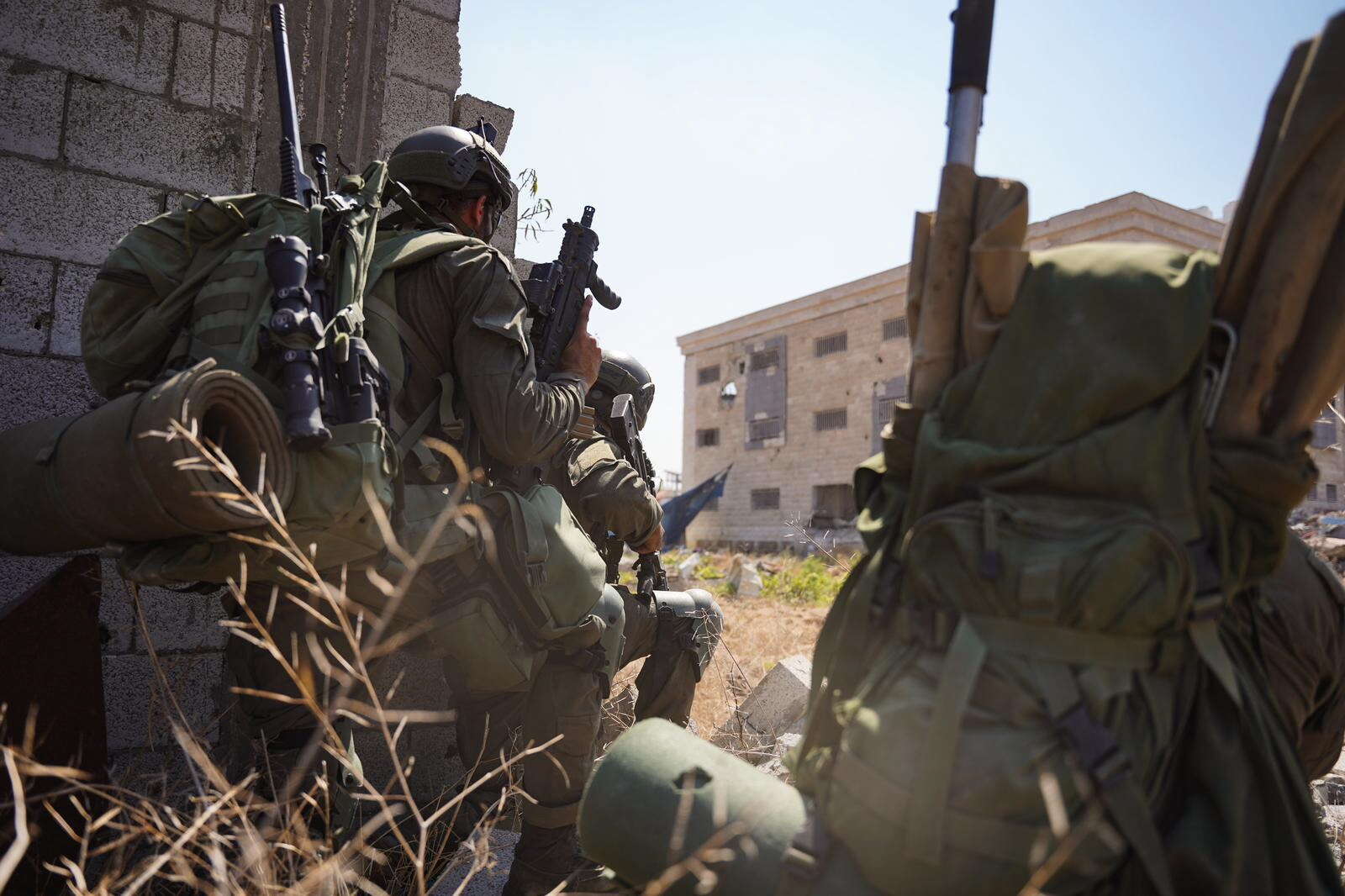
IDF forces in the Gaza Strip, June 2024
"It's related to many components, so
there's no definitive answer to this. It's completely clear that the
American administration knew and also understood that Israel was going
out to attack, but that doesn't mean they approved it. There are no
pre-written rules stating that we notify them two days in advance of
what we're about to do. Everything depends on context. But beyond that,
remember that the Americans have a lot of forces deployed in the area,
so they can identify movements that Israel is making. They know what's
happening on the ground even without us telling them."
From EUCOM to CENTCOM
Until January 2021, military
cooperation between Israel and the US was based on working relationships
between the IDF and EUCOM, the Pentagon's European Command. Ahead of
the signing of the Abraham Accords, the Americans decided on their own
initiative to transfer Israel to CENTCOM's responsibility, a move that
Israel welcomed with open arms and which opened up for the IDF the
possibility of cooperating more closely not only with the Americans but
also with the moderate countries in the region. Shortly after, Kurilla
was appointed as CENTCOM commander, which deepened the relationships
even further.
"Kurilla's personal contribution is
dramatic," Kochav says. "He's very committed to this mission, he's very
offensive, and his standing in the Pentagon, in Washington, and among
the administration is very significant."
According to a source in the Defense
Ministry, Kurilla "is a very pro-Israel figure, and he has an excellent
relationship with Herzi and with the army in general."
Kurilla also went down for a tour of
Kibbutz Nahal Oz and the nearby outpost, was deeply impacted by the
atrocities Hamas committed there, and came out shocked. "Kurilla is
fully aware of what happened on Oct. 7," a source who spoke with him
recently says.
There's no doubt that this personal
identification also contributes to the relationship between CENTCOM and
the IDF. It adds to the phone calls that take place between Kurilla and
Halevi, almost on a daily basis, and to CENTCOM commander's frequent
visits to Israel, especially since the outbreak of the war. "The joke in
the system," says a security source, "is that Kurilla needs to get his
own office in the General Staff building. That's how consolidated
CENTCOM and the IDF are."