Who really runs Iran?
Iranian President Masoud Pezeshkian apologized on state television to neighboring countries for recent attacks, but missiles and drones continued to strike the Gulf region soon afterward. At the same time, parliament speaker Mohammad Bagher Ghalibaf and other hardline figures publicly rejected the president's statement, showing deep divisions within Iran's leadership and suggesting that real power remains in the hands of the Islamic Revolutionary Guard Corps.
Danny Citrinowicz
Israel Hayom
Mar 7, 2026

Iranian President Masoud Pezeshkian Pezeshkian's statement was not a marginal episode. It raises a
fundamental question: who is actually in charge of Iran right now? The
assumption that the Iranian system was resilient enough to withstand the
shock of Supreme Leader Ali Khamenei's assassination, partly because it
had long prepared for such a possibility, is now facing serious doubt,
especially in light of Israel's continuing strikes on Iranian command
and control centers. Pezeshkian, who can be described as perhaps the weakest president in the
history of the Islamic Republic and someone with limited influence in
the regime's key power centers, now joins Foreign Minister Abbas
Araghchi in suggesting that they are struggling to reach forces on the
ground that had already received prior instructions. In his address to Iran's neighbors
on state television, Pezeshkian offered a rather subdued apology for the
attacks and called for regional cooperation. "From now on, we will not
attack neighboring countries unless they attack us first," he said,
referring to attacks launched from their territory. Pezeshkian is one of
three members of the temporary leadership council established following
Khamenei's assassination, alongside the head of the judiciary and a
cleric representing the Assembly of Experts.
Parliament Speaker Mohammad Bagher
Ghalibaf, together with other figures from the hardline camp closely
aligned with the Revolutionary Guards, responded in unmistakable terms,
openly challenging the authority of someone who is theoretically one of
the three people tasked with running the country during the interim
period until a new supreme leader is selected.
"The defensive policy of the
Islamic Republic is fixed and will not change, according to the
directives of our martyred imam," the parliament speaker wrote. "As long
as American bases exist in the region, countries will not see calm. The
source of any attack will be the target of our response."
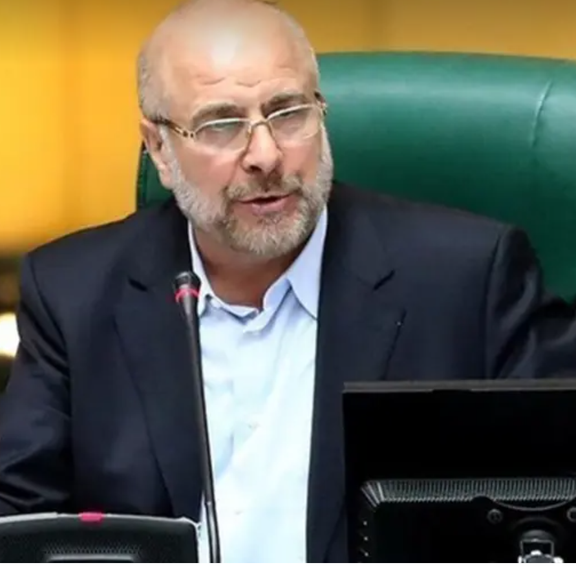
Parliament Speaker Mohammad Bagher Ghalibaf The continued attacks point to two
possible explanations: either there is a growing disconnect between the
political leadership and the security apparatus, or elements within the
security establishment are acting independently of the political
leadership. What is happening behind the scenes is impossible to see,
but when the political leadership says one thing while the opposite
occurs on the ground, it signals a mounting challenge within the
regime's decision-making system.
Pezeshkian was a weak president
even before the war. Khamenei's death may have increased his authority
on paper, but in practice the security establishment appears to pay
little attention to his statements or directives. He can say whatever he
wishes. The reality is that the decisions that matter are made by the
security institutions, foremost among them the Islamic Revolutionary
Guard Corps.
Every day that Iran delays
appointing a new supreme leader deepens the sense of uncertainty within
the regime. The system was expected to move relatively quickly after
Khamenei's death, but the ongoing hesitation suggests profound internal
disagreements over the succession.
One possible outcome is the
appointment of Mojtaba Khamenei, the eliminated leader's son. Such a
move could raise concerns that the next supreme leader would function
largely as a figurehead while the Revolutionary Guards hold the real
power.

Mojtaba Khamenei
If that scenario unfolds, it could
further complicate Iran's internal power structure and make the
situation even more volatile. While Pezeshkian appears to be trying to
participate in the decision-making process, or at least signal that he
is doing so, the Revolutionary Guards seem to be operating according to
their own calculations, with the forces on the ground still guided by
instructions that Khamenei issued before his death.
In a sense, the spirit of the
supreme leader still governs events. Even the appointment of a successor
may not necessarily lead to a departure from the course he set.
Either
way, the regime's embarrassing chain of events likely increased
pressure to accelerate the decision on Iran's next supreme leader, if
only to provide it a sense of certainty.
In his address to Iran's neighbors on state television, Pezeshkian offered a rather subdued apology for the attacks and called for regional cooperation. "From now on, we will not attack neighboring countries unless they attack us first," he said, referring to attacks launched from their territory. Pezeshkian is one of three members of the temporary leadership council established following Khamenei's assassination, alongside the head of the judiciary and a cleric representing the Assembly of Experts.
Parliament Speaker Mohammad Bagher Ghalibaf, together with other figures from the hardline camp closely aligned with the Revolutionary Guards, responded in unmistakable terms, openly challenging the authority of someone who is theoretically one of the three people tasked with running the country during the interim period until a new supreme leader is selected.
"The defensive policy of the Islamic Republic is fixed and will not change, according to the directives of our martyred imam," the parliament speaker wrote. "As long as American bases exist in the region, countries will not see calm. The source of any attack will be the target of our response."
The continued attacks point to two possible explanations: either there is a growing disconnect between the political leadership and the security apparatus, or elements within the security establishment are acting independently of the political leadership. What is happening behind the scenes is impossible to see, but when the political leadership says one thing while the opposite occurs on the ground, it signals a mounting challenge within the regime's decision-making system.
Pezeshkian was a weak president even before the war. Khamenei's death may have increased his authority on paper, but in practice the security establishment appears to pay little attention to his statements or directives. He can say whatever he wishes. The reality is that the decisions that matter are made by the security institutions, foremost among them the Islamic Revolutionary Guard Corps.
Every day that Iran delays appointing a new supreme leader deepens the sense of uncertainty within the regime. The system was expected to move relatively quickly after Khamenei's death, but the ongoing hesitation suggests profound internal disagreements over the succession.
One possible outcome is the appointment of Mojtaba Khamenei, the eliminated leader's son. Such a move could raise concerns that the next supreme leader would function largely as a figurehead while the Revolutionary Guards hold the real power.
Mojtaba Khamenei
If that scenario unfolds, it could further complicate Iran's internal power structure and make the situation even more volatile. While Pezeshkian appears to be trying to participate in the decision-making process, or at least signal that he is doing so, the Revolutionary Guards seem to be operating according to their own calculations, with the forces on the ground still guided by instructions that Khamenei issued before his death.
In a sense, the spirit of the supreme leader still governs events. Even the appointment of a successor may not necessarily lead to a departure from the course he set.
Either way, the regime's embarrassing chain of events likely increased pressure to accelerate the decision on Iran's next supreme leader, if only to provide it a sense of certainty.


No comments:
Post a Comment