Texas Senate panel moves to cut minimum residential lot sizes in large cities
By Hannah Norton
Community Impact
Mar 17, 2025
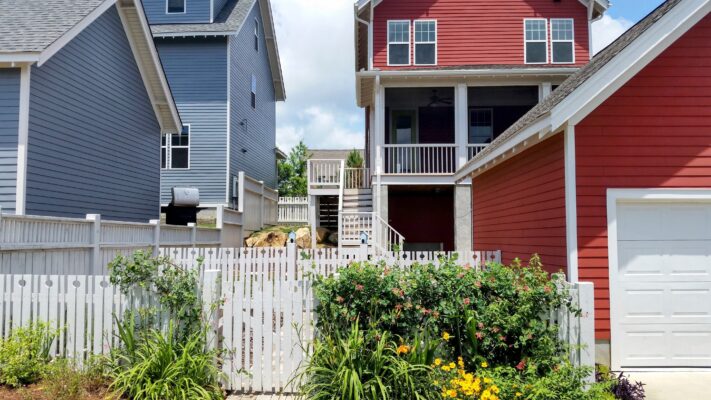
Senate Bill 15 would authorize property owners in large Texas cities to construct single-family homes on lots as small as 1,400 square feet without approval from local officials.
A Texas Senate committee is looking to make housing more affordable by allowing homes to be built on smaller plots of land. Senate Bill 15
would authorize property owners in large Texas cities to construct
single-family homes on lots as small as 1,400 square feet without
approval from local officials.
The bill would apply to land larger than five acres that has not been mapped or platted.
Members of the Senate Local Government Committee voted 6-0 March 13 to send the bill to the full Senate.
The overview
SB 15 would apply to cities with at least 90,000 residents located in
counties with populations of at least 300,000—including Harris, Dallas,
Tarrant, Bexar, Travis, Collin, Denton, Fort Bend, Montgomery and
Williamson counties.
Bill author Sen. Paul Bettencourt,
R-Houston, said the proposal is modeled after the city of Houston’s
residential lot size policies. Houston officials lowered single-family
lot sizes in the city center from 5,000 square feet to 1,400 square feet
in 1998, according to the Bipartisan Policy Center, and expanded the ordinance to the entire city in 2013.
“In
the last decade, there has been an incredible acceleration in the age
of the average homebuyer, and that means that the average homebuyer is
obviously very affected by affordability,” Bettencourt said during a
March 10 committee hearing.
The average U.S. homebuyer was 56 years old in 2024, up from 49 years old the year prior, the National Association of Realtors
reported in November. This is the highest average age since the
association began publishing annual data in 1981, according to the
report.
“The cost to build versus what the average Texas family can afford has
never been wider, and it's growing. ... Starter homes that used to be
very accessible and abundant, they're no longer there, and it's
heartbreaking,” Greg Anderson, director of community affairs for Austin Habitat for Humanity, told the committee March 10.
The local impact
If SB 15 becomes law, it would supersede regulations in the city of Austin, which allows single-family homes to be built on lots 1,800 square feet or larger. Local officials approved the changes last spring in an attempt to permit more housing types and smaller homes than have traditionally been allowed in Austin.
The
bill would prohibit local governments from requiring single-family
homes to be built on lots larger than 1,400 square feet. For lots
smaller than 4,000 square feet, Bettencourt said officials would not be
allowed to enforce zoning restrictions related to height, parking spaces
or setbacks, which refer to the minimum distance between buildings and
property lines.
To ensure “the characteristics of existing neighborhoods are not heavily
impacted,” Bettencourt noted the proposed changes would only apply to
land larger than five acres that has not been mapped or platted by Sept.
1.
Georgetown mayor Josh Schroeder said SB 15 would be “an
absolute disaster” for his city, due to potential increases in
population density. Georgetown had about 96,000 residents in 2023 and is located in Williamson County.
“[This
is] a tax hike on my community. ... It would have millions of dollars
of impact on our water, wastewater and road systems that our community
would be required to pay for,” Schroeder told committee members March
10.
Glenn Hamer, CEO of the Texas Association of Business, said SB 15 would help more Texans “continue the American dream” of owning homes.
“[This] proposal represents critical steps towards increasing housing
affordability for working Texans and accessibility for all Texans,”
Hamer said March 10. “Reducing minimum lot size requirements enables
construction and essentially restores the concept of starter homes.”
Texas’ population growth has outpaced homebuilding since 2020, the state comptroller’s office reported in August, resulting in a widespread housing shortage. Up For Growth, a national housing policy organization, estimated in 2023 that Texas needs about 306,000 more homes to meet demand.
Also of note
During the March 10 hearing, senators also discussed Senate Bill 673 and Senate Bill 840,
both by Sen. Bryan Hughes, R-Mineola. The two bills were left pending
in the committee March 10, but could be sent to the full Senate during a
future hearing.
SB 673 would allow residential property owners in Texas to construct
accessory dwelling units, or secondary residential buildings, on the
same lot as single-family homes.
“These are independent, private,
secure housing units that can be detached from or attached to the
primary home,” Hughes said March 10. “The bill empowers private property
owners to address the workforce and housing crisis while offering them
options [on] how to use their own residential property and alleviate
long commutes.”
Hughes said the bill would not impact deed
restrictions or homeowners’ association rules that may prohibit
accessory dwelling units. However, local governments would not be able
to bar landowners from building these units on their property, he said.
Under
SB 840, developers would have the option to build residential and
mixed-used properties on land zoned for commercial use. Hughes said this
would help alleviate housing shortages by allowing companies to convert
vacant office buildings into apartments “without having to go through
the process of rezoning.”
“The rezoning process is lengthy, it's
complex. And of course, we know that everything we do to add to the cost
of new housing prices families out of the market,” Hughes said during
the hearing. “1,300 people are moving to Texas every day. We have... to
get ahead of this.”


No comments:
Post a Comment