Backed by Mexico and Brazil, Gabriel
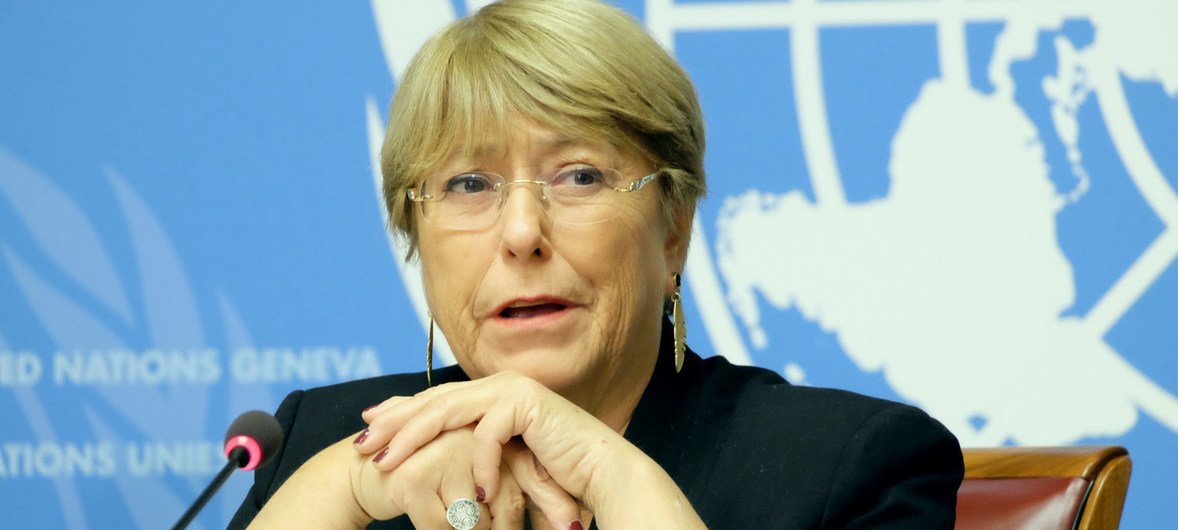
Boric, Chile’s outgoing president, nominated former Chilean president
Michelle Bachelet, a harsh critic of the Jewish state, to be the next
secretary-general of the United Nations.
Boric, who is also anti-Israel, made the
announcement on Monday. José Antonio Kast, a right-wing politician set
to assume the Chilean presidency next month, would be unlikely to
nominate Bachelet, 74, for the role.
Bachelet, who was Chile’s president
twice—from 2006-10 and 2014-18—was the first head of U.N. Women and
served as U.N. high commissioner for human rights.
She was a frequent critic of the Jewish
state, which broke ties with her office in 2020 over her decision to
implement a U.N. Human Rights Council resolution mandating the
publication of a blacklist of companies engaged in business in Judea and
Samaria and eastern Jerusalem.
According to U.N. Watch, Bachelet issued
14 comments about Israel, more than any democratic country. She made the
same number of statements about Syria and fewer about Iran, according
to the watchdog.
Bachelet used her final hours in office to
decry Israel over its denial of visas to her staff. She ignored
antisemitic comments made by a member of the Human Rights Council’s
commission of inquiry on the Israeli-Palestinian conflict, for which the
commissioner later apologized.
The United Nations has never had a female
secretary-general. The other nominees are Rebeca Grynspan, former second
vice-president of Costa Rica and currently secretary-general of the
U.N. Conference on Trade and Development; Mexican environment and
natural resources secretary Alicia Bárcena; and Barbados Prime Minister
Mia Mottley.
Rafael Grossi, the Argentinian head of the International Atomic Energy Agency, has also been nominated.
Latin America is up next in the
traditional U.N. rotation of world regions. Portugal’s António Guterres
is secretary-general until the end of the year.


No comments:
Post a Comment