Hidden Alcatraz flaw that allowed greatest ever prison break is finally revealed
By Stacy Liberatore
Daily Mail
Dec 11, 2025
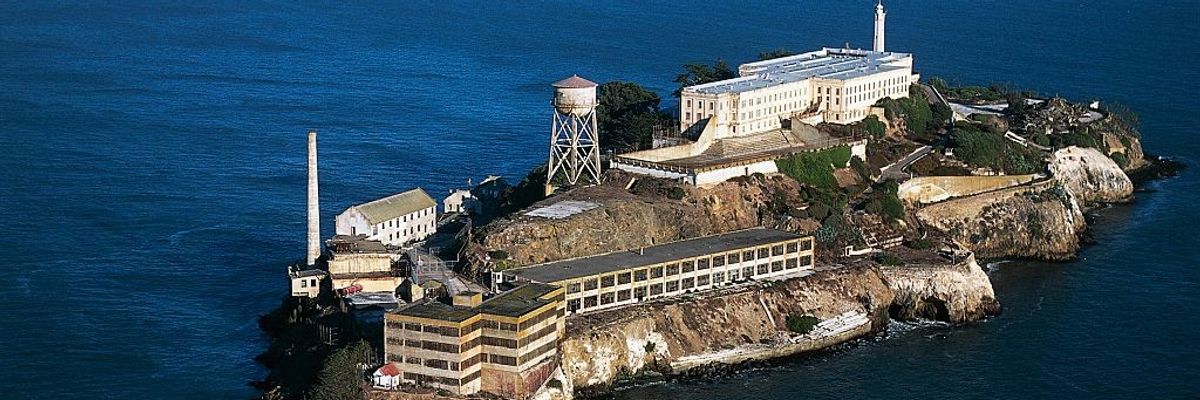
Located on a lonely island in the middle of San Francisco Bay, Alcatraz had held captives since the Civil War until it was shut down in 1963
It is hailed as America's greatest prison break.
In June 1962, three inmates at Alcatraz fooled guards with papier-mâché heads, carved tunnels with spoons, stitched together a raft from raincoats and vanished into the frigid San Francisco Bay.
But while brothers John and Clarence Anglin and friend Frank Morris masterminded the escape, an Alcatraz researcher told Daily Mail that a hidden design flaw in the prison itself helped pave their way to freedom.
John Martini, who has studied 'The Rock' for more than 35 years, said he was on the island when engineers examined the concrete behind the escape cells.
One expert, specializing in concrete, immediately spotted the issue: 'Well, there's your problem. It wasn't poured correctly.'
When concrete is poured in large batches, it must be vibrated with a long, high-speed rod to eliminate air pockets and help it settle evenly.
But at Alcatraz, Martini said, the concrete appeared to have simply been poured into place and left to harden, making it easer for the convicts to dig through the cell wall.
Built in 1909 using convict labor, the prison was notorious for cutting corners, so the lack of quality control didn't surprise him.
'I'm sure the convicts didn't know about the mistake,' Martini added. 'They just lucked out.'

Located on a lonely island in the middle of San Francisco Bay, Alcatraz had held captives since the Civil War.
It was not until 1934 that the three-story concrete cellhouse was re-fortified into the world's most secure prison.
Its inmates would eventually include notorious public enemies like Al Capone and George 'Machine Gun' Kelly, seasoned escape artists, and even eccentric figures such as the infamous 'Birdman of Alcatraz.'
By the 1930s, Alcatraz was already a grim fortress, isolated by the cold, churning waters of the Pacific.
The federal redesign only made it harsher with reinforced iron bars, strategically placed guard towers and rigid routines that included a dozen prisoner checks a day.
On paper, escape was virtually impossible, but between 1934 and its closure in 1963, 36 inmates attempted 14 escapes. Almost all were either captured or died trying.
But the three men who tunneled through the prison were the only ones to reach the outside.
They spent months quietly tunneling out of their cells. When the night came, the slipped through the holes they had carved, crawled into a hidden utility corridor, made their way up to the roof, down a vent pipe, across several fences and finally into the San Francisco Bay.
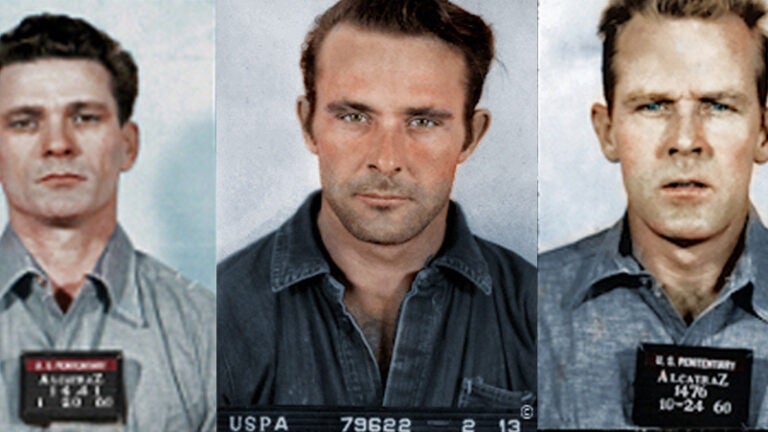

Because they had crafted realistic dummy heads, made from soap, concrete dust, coiled electrical cord, plaster of Paris and hair collected from the prison barbershop, the guards believed they were asleep in their bunks.
The ruse gave them an eight-hour head start before anyone realized they were gone.
'The routine in the prison was the same every day. Around 7am, they did a stand-up head count,' Martini said.
'All night long, officers would check on the inmates, but because those were dummy heads in the beds, no one noticed anything was off, they just didn’t get up.
'In the morning, when they still didn’t stand for count, the officer I interviewed said they walked up to one of the cells.
'A guard called out, "We’ve got a sleeper here." Officer Mahoney stepped up and shouted, "Morris, get up!" He tried again, "Morris, get up!," and then reached through the bars and slammed his fist on the pillow beside the head.
'The dummy head flew off, and he said he jumped back about three feet. The whistle blew, and that’s when everything began.'

The men put face dummy heads in their beds, hoping to convince the guards they were sleeping when they were actually escaping

Because they had crafted realistic dummy heads, made from soap, concrete dust, coiled electrical cord, plaster of Paris and hair collected from the prison barbershop, the guards believed they were asleep in their bunks.
Some have speculated that the three men may have reached Angel Island or the Golden Gate Bridge, with survival depending on timing and currents.
Other theories posit they drowned, some even claim the men made it to South America, supported by alleged photos and family claims, though the FBI officially declared them dead.
'I asked one of the guys who was working that night. By then, everyone in the prison seemed to have some sense that something was about to happen,' Martini said.
'I said, "What do you think really happened?’ And he told me, ‘Oh, they escaped.’'

'I asked if he thought they drowned, and he said, "Yeah, they probably did. But they escaped. They were free men for those few moments."
'That’s what mattered to him, not whether they survived the Bay, but that they broke out.'
While much of the public holds on to the idea that the men could have lived on after the escape, Martini said that he looks at this case with the simplest explanation.
'They went into the water, 40-degree water, in the dead of night, with the tide pulling out, using some kind of improvised inflatable cushion,' he said.
'They were trying to make it to Angel Island, and they were never seen again. But two of the life vests, a paddle, and some of their personal belongings were later found floating in the bay.
'In the end, everything points to the same conclusion: they tried, and they failed.'


2 comments:
Actually there was another one. The man made it to the shore in San Francisco but was so wiped out he just laid there and was arrested almost immediately.
Salt water rots and rusts everything. Alcatraz was and is falling apart. Concrete is porous which means even the rebar placed inside will rust. You can probably kick your way out of an original cell. In Galena Park, Texas there is the Washburn Tunnel that runs under the Houston Ship Channel. It was completed in 1950. It's still used to this day. Just not by me.
Post a Comment