At Mar-a-Lago, Netanyahu and Trump test the limits of peace
Shared democratic values bind Israel and the U.S., even as war, Hamas and Iran complicate Trump’s vision of peace in the Middle East.
By Fiamma Nirenstein
JNS
Dec 30, 2025
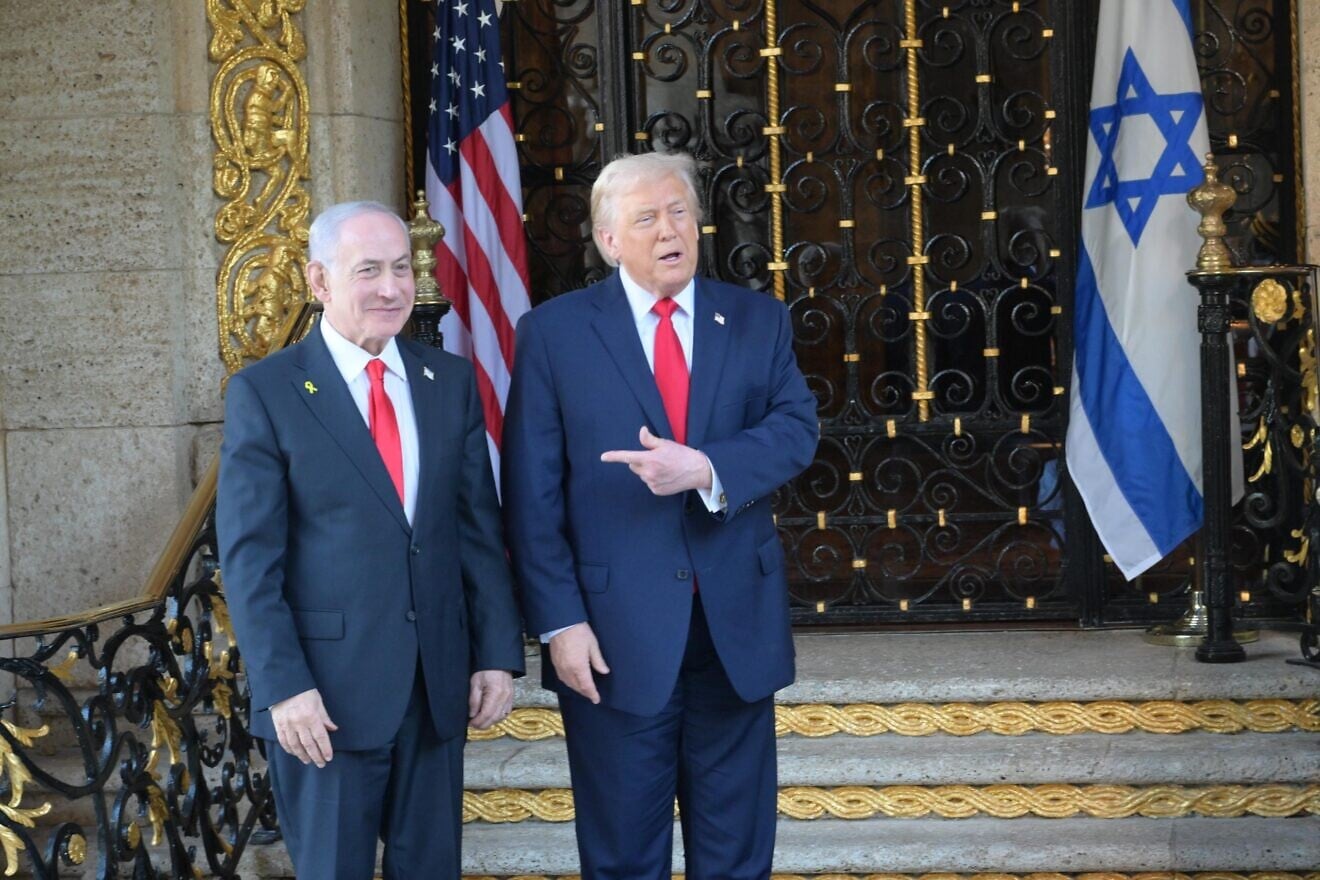
At U.S. President Donald Trump’s Mar-a-Lago Club on Monday, Israeli Prime Minister Benjamin Netanyahu confronted what seemed to be an impossible mission. The international stage has shifted: Ukrainian President Volodymyr Zelenskyy has exited the spotlight, while Netanyahu was invited to take part in the grand design of world peace envisioned by the American leader—a vision not without complications.
From Israel’s point of view, Trump’s statement that he would “absolutely” support additional Israeli strikes on Iranian missile and nuclear facilities was critical. When JNS’s CEO Alex Traiman asked the U.S. president about his relationship with Netanyahu, Trump was effusive.
“Israel, with other people, might not exist right now,” Trump said. “He’s a wartime prime minister. He’s done a phenomenal job. He’s taken Israel through a very dangerous period of trauma.”
For his part, Netanyahu honored Trump by announcing that Israel had decided to award the Israel Prize, which had never been given to a non-Israeli, to Trump.
The intricate knot of shared interests and deep divergences surrounding Trump’s idealized biographical legacy has not disrupted the strong rapport between the two leaders, nor the enduring bond between the American and Israeli democracies.
The reason is clear: the battle is shared, and Israel stands on one of the most dangerous front lines. Once again, a strategic and moral alignment was evident. The inevitable frictions are rewoven during a war that radical Islam has imposed on the West.
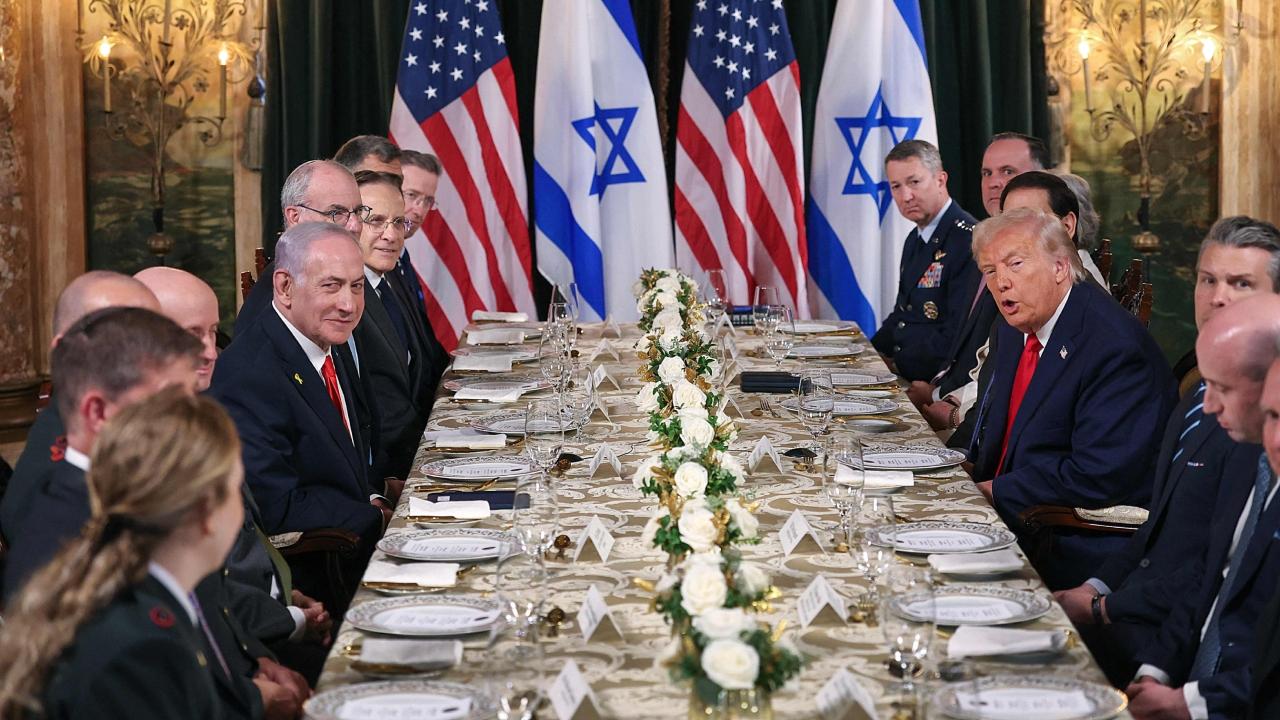
President Trump, Prime Minister Netanyahu and their teams meet during lunch at Mar-a-Lago on Dec. 29, 2025.
Trump knows exactly what Hamas is, even if he wishes Israel would now quiet the battlefield. This was their sixth meeting in a single year—an extraordinary number. Trump would like a Christmas-wrapped peace for the sake of history. But he understands it is not within easy reach. Israel, for its part, would gladly deliver such a gift. Yet without disarming Hamas and bringing every hostage home, Israel’s very existence becomes fragile, while wolves lurk beneath the desert sands.
Netanyahu returned home bolstered by Washington’s essential support—even amid differences—even as Trump presses to begin Gaza’s reconstruction. But Hamas must first be disarmed, as stipulated in the Sept. 29 ceasefire agreement, and only Israel is prepared to enforce that reality. Turkey and Qatar, among others, eager to display their “peace credentials” in Gaza, might claim willingness to act.
Hamas has already said it will surrender its weapons only to its friends—first and foremost the Palestinian Authority. Israel knows better: Ankara and Doha would merely store those arms for the next round, and Jerusalem will not allow it.
Netanyahu is thinking beyond a single Gaza campaign. He knows Judea and Samaria are teeming with terrorists, that Iran and Qatar—along with Hamas’s other global patrons, as Italy has recently illustrated—continue to funnel weapons and money. He also knows Iran is preparing an intensified ballistic rearmament that must be stopped, just as Hezbollah still refuses to disarm.
Trump may sigh, “Ah, this Middle East,” but he understands that in the end it is in America’s interest to cover the back of its only truly steadfast ally. Netanyahu, in turn, wants to act decisively against Hamas and Iran, but knows Israel has a vital need to remain aligned with Trump. And Trump knows that Israel is, ultimately, the great defensive wall of Western democracy in the midst of a jihadist jungle.
Their agreement rests on a shared commitment to defending democracy—even as Trump bristles at Israel’s complexities, including the antisemitism it attracts and the $4 billion in annual U.S. aid. Yet an Israeli team is working to reshape that relationship, moving away from “gifts” toward a shared research-business-technology partnership. Breakthroughs like the activation of Israel’s first laser defense system, Or Eitan, point the way forward.
So do Netanyahu’s recent strategic moves: engagement with Somaliland, positioning Israel near critical global energy routes and against Iran’s Houthi proxies; and deepening cooperation with Greece and Cyprus to forge a Mediterranean defense front that hardly pleases Islamist hegemonic ambitions.
Netanyahu traveled to the United States accompanied by the parents of the last captive yet to be returned—Ran Gvili, a hero whose body remains in Hamas’s hands. It was a powerful statement of national identity.
Trump aspires to speak of peace in the region, but he must do so with a very small country that knows how to fight when necessary—and how to think.


1 comment:
Well deserved.
Post a Comment