A refuge on the equator: The Jewish story of Ecuador
In the 1930s, as Nazi persecution spread across Europe and countries slammed their doors shut to fleeing families, this Latin American nation became an unlikely sanctuary.
By Michael Freund
JNS
Mar 13, 2026
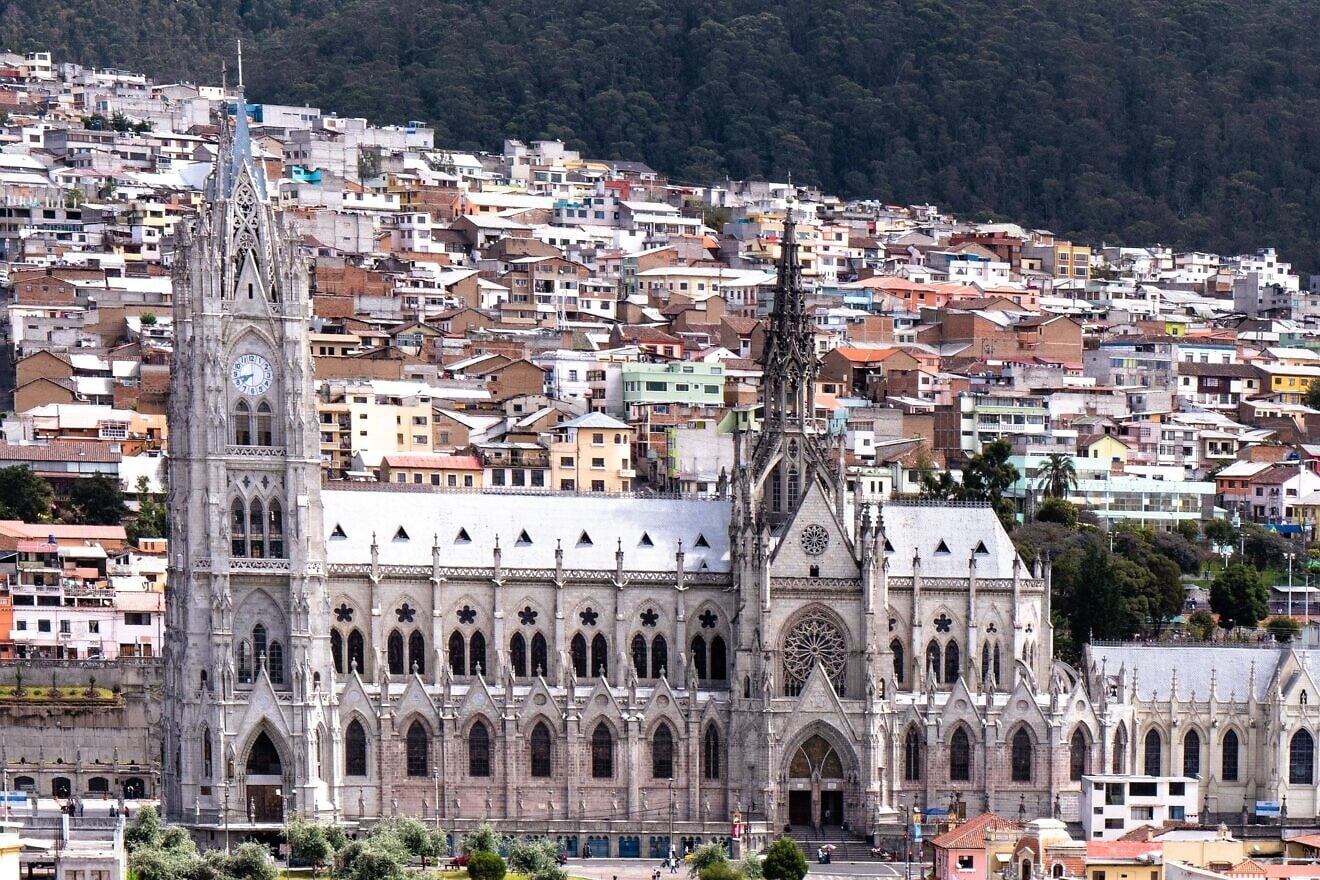
Sometimes, the most remarkable chapters of Jewish history unfold in the most unlikely places. One such place is Ecuador, a small country straddling the equator on South America’s Pacific coast that quietly played a role disproportionate to its size in offering refuge to Jews during one of the darkest chapters of the 20th century.
At a time when nation after nation shut its doors to Jews fleeing Nazi persecution, Ecuador, despite limited resources, became an unexpected haven. In doing so, it joined a small group of Latin American countries, including Bolivia and the Dominican Republic, that provided limited but vital refuge during the Holocaust era.
Like much of Latin America, Ecuador’s earliest encounters with Jews date back to the colonial era. Following the expulsions from Spain and Portugal at the close of the 15th century, conversos—Iberian Jews forced to convert to Catholicism —made their way to the New World. Some settled in territories that would later become Ecuador, though the reach of the Spanish Inquisition ensured that any lingering Jewish identity remained hidden and precarious.
For centuries thereafter, overt Jewish life in Ecuador was minimal. It was not until the late 19th and early 20th centuries that a small number of Jewish merchants and entrepreneurs began arriving, laying the groundwork for what would eventually become an organized community.
In the 1920s, a handful of Ashkenazi Jews from Eastern Europe arrived, often as merchants or peddlers, establishing small businesses in urban areas. By the late 1930s, Ecuador’s government began issuing visas more liberally to Jewish refugees, frequently requiring applicants to obtain visas nominally tied to agricultural work, though in practice most ultimately settled in cities and entered commerce or the professions.

Guayaquil, Ecuador
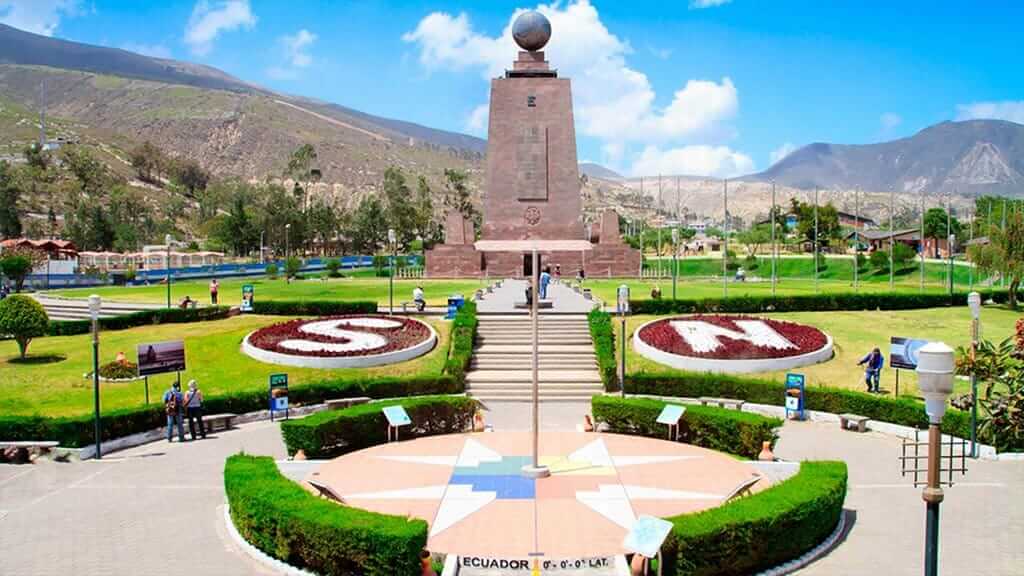
The equator at Mitad del Mundoin in Ecuador. (I straddled the equator there on August 9, 2002 with my right foot in the South and my left foot in the North - ed.)
The true turning point came in the 1930s as Nazi persecution spread across Europe. With country after country slamming its doors shut to desperate Jewish refugees, Ecuador became an unlikely sanctuary.
Beginning in 1933, Jews from Germany, Austria and other parts of Central Europe began seeking refuge there. By the end of World War II, approximately 2,500 to 3,000 European Jews had found haven in Ecuador, and by the early 1950s, the community numbered around 4,000 people.
Their journey to Ecuador was rarely easy. Immigration policies fluctuated, bureaucratic hurdles abounded and economic conditions in a developing nation were often uncertain. Yet compared with the near-total closure of much of the world, Ecuador still offered something invaluable: a chance to survive.
Most of the newcomers settled in Quito, the country’s capital high in the Andes Mountains, and in the coastal port city of Guayaquil. There they began the difficult task of rebuilding their lives.
Gradually, the foundations of organized Jewish communal life took root. Synagogues were established, social organizations were formed, and Jewish schools began educating the next generation. Institutions such as the Comunidad Judía del Ecuador worked to help organize religious and communal life, ensuring that Jewish identity could endure even far from traditional centers of Jewish life.
Among those who rebuilt their lives in Ecuador was the Hungarian-Jewish artist Olga Fisch, who arrived in Quito in 1939 after fleeing Nazi persecution. Fascinated by Ecuador’s indigenous culture, she later founded a gallery that helped introduce Ecuadorian folk art to international audiences. Like many Jewish refugees who found shelter in Ecuador, she rebuilt her life far from home while contributing meaningfully to the society that had given her refuge.
Ecuador’s contribution to Jewish survival during the Holocaust era was not limited to providing refuge on its own soil.
In one remarkable episode, an Ecuadorian diplomat demonstrated extraordinary moral courage in the face of Nazi barbarity. Manuel Antonio Muñoz Borrero, Ecuador’s consul in Stockholm during World War II, issued dozens of Ecuadorian passports and documents to try and protect Jews from deportation and death.
Possession of such documents could transform a Jew from a target of deportation into a foreign national eligible for internment or prisoner exchange rather than immediate extermination. For his actions, Muñoz Borrero was recognized in 2011 by Yad Vashem as a Righteous Among the Nations, the first Ecuadorian to receive that honor.
In the decades following World War II, Ecuador’s Jewish community continued to develop and contribute to economic and cultural life. Jewish immigrants established businesses, entered professions such as medicine and engineering, and integrated into Ecuadorian society while maintaining their religious and cultural heritage.
Yet like many Jewish communities in Latin America, Ecuador’s began to shrink in the latter half of the 20th century. Fiscal challenges, political instability and the attraction of larger Jewish centers prompted many to emigrate, particularly to Israel, the United States and Canada.
These days, Ecuador’s Jewish population is estimated at between 600 and 800 people, mainly concentrated in Quito with a smaller presence in Guayaquil. Despite its modest size, the community maintains synagogues, educational institutions and communal organizations that preserve Jewish life in the country.
Ecuador’s relationship with the Jewish people is also reflected in its diplomatic ties with Israel. In November 1947, the Latin American country voted in favor of the U.N. partition plan that paved the way for the establishment of the Jewish state. Diplomatic relations between the two countries were formally established in 1950, and cooperation has since developed in fields ranging from agriculture to technology.
In recent years, bilateral ties have deepened. In May 2025, Ecuadorian President Daniel Noboa made a historic visit to Israel—the first by an Ecuadorian president—where he met with Israeli Prime Minister Benjamin Netanyahu, and opened an innovation and trade office with diplomatic status in Jerusalem. Ecuador has also designated Hamas, Hezbollah and Iran’s Islamic Revolutionary Guard Corps as terrorist organizations, aligning closely with Israeli security priorities.
At the same time, renewed interest in Jewish heritage has emerged in Ecuador. Families tracing their ancestry have uncovered connections to converso roots dating back centuries, echoing a broader phenomenon across Latin America in which descendants of forced converts are rediscovering Jewish identity.
Recent developments have also brought recognition to Ecuador’s wartime history. In 2018, the country posthumously restored the diplomatic credentials of Muñoz Borrero, which had been revoked in 1942 after he issued passports to help save Jews from Nazi persecution.
Taken together, these threads form a remarkable tapestry. Ecuador may never have been home to a large Jewish population, but at a crucial moment in history, it offered refuge when it was desperately needed.
When so much of the world turned its back on Jews fleeing Nazi persecution, Ecuador chose a different path. Thousands of lives were saved as a result, and the story of Ecuador’s Jews deserves to be remembered not as a footnote in Jewish history but as a testament to the enduring power of refuge, resilience and moral courage.


No comments:
Post a Comment