Is It Really Going to Start Soon?
Israel is busy preparing for the outbreak of an unprecedented war against Iran and its proxies, and we can all feel it.

For more than a week, Israel has been training for a multi-front war in which, among other things, an Israeli airstrike in Iran was practiced. In the scenario of the maneuver, pro-Iranian militias from Iraq, Syria, Lebanon and the Gaza Strip attack Israel with rockets. At the same time, violent unrest among the Arab population breaks out in the country.
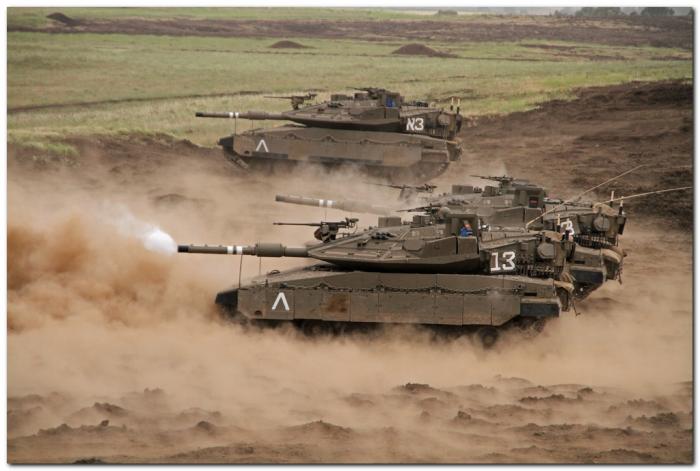 IDF exercise on the Syrian border.
Israel’s Home Front Command has practiced situations in which ballistic missiles kill hundreds of Israelis and injure thousands. In this scenario, Israel’s rescue organizations were faced with more than a thousand destroyed buildings. A scenario was practiced according to which the rocket attacks on Israel completely paralyze and partially destroy life in the country. “We have practiced an extreme scenario and are seriously preparing for it,” a government source told Israeli media. “The ability to fire rockets at Israel’s interior from multiple fronts is creating a large number of hotspots across the country and nationwide destruction not seen since Israel’s founding,” the source added, explaining that such a scenario will affect the ability of the nation to operate normally, for example due to a power failure. “We saw what happened a week and a half ago when there was no electricity in half the country because of the heat wave.”

Israel’s defense organs said that a situation would arise in which the air defense system would be radically challenged. Data on the volume of rocket attacks from the various fronts were kept secret, but the data on the volume of rockets from Lebanon was given: 3,000 rockets in the first days of the war. A new feature called “Cell Broadcast” was introduced for the first time during the Firm Hand maneuver, which allows Home Front Command to broadcast missile alerts and warnings directly to citizens, even without the user downloading the Home Front Command app. Also, the messages are sent to citizens in the language in which the user is using their device.
It is also known that Israel’s Home Front Command, under massive rocket fire, practiced evacuating civilians from 50 settlements within a five-kilometer radius to safe centers under the supervision of the Israeli Ministry of Health. As a result of the maneuver, a number of security gaps became apparent again, particularly in northern Israel. It was also decided to create a new headquarters for the Home Front Command, where soldiers would be deployed in providing social assistance, medical assistance and food aid to the populations in the major evacuation centers, including those in the Jordan Basin and Arava Desert. These are empty and long stretches of land that are not considered targets, and Israel wants to set up its rescue centers there.


No comments:
Post a Comment