Vetting the ayatollah: Why Trump’s intervention in Iran could save generations of Jewish lives
The choice of Iran’s next leader will determine the trajectory of regional security for decades to come.
By Amine Ayoub
JNS
Mar 9, 2026
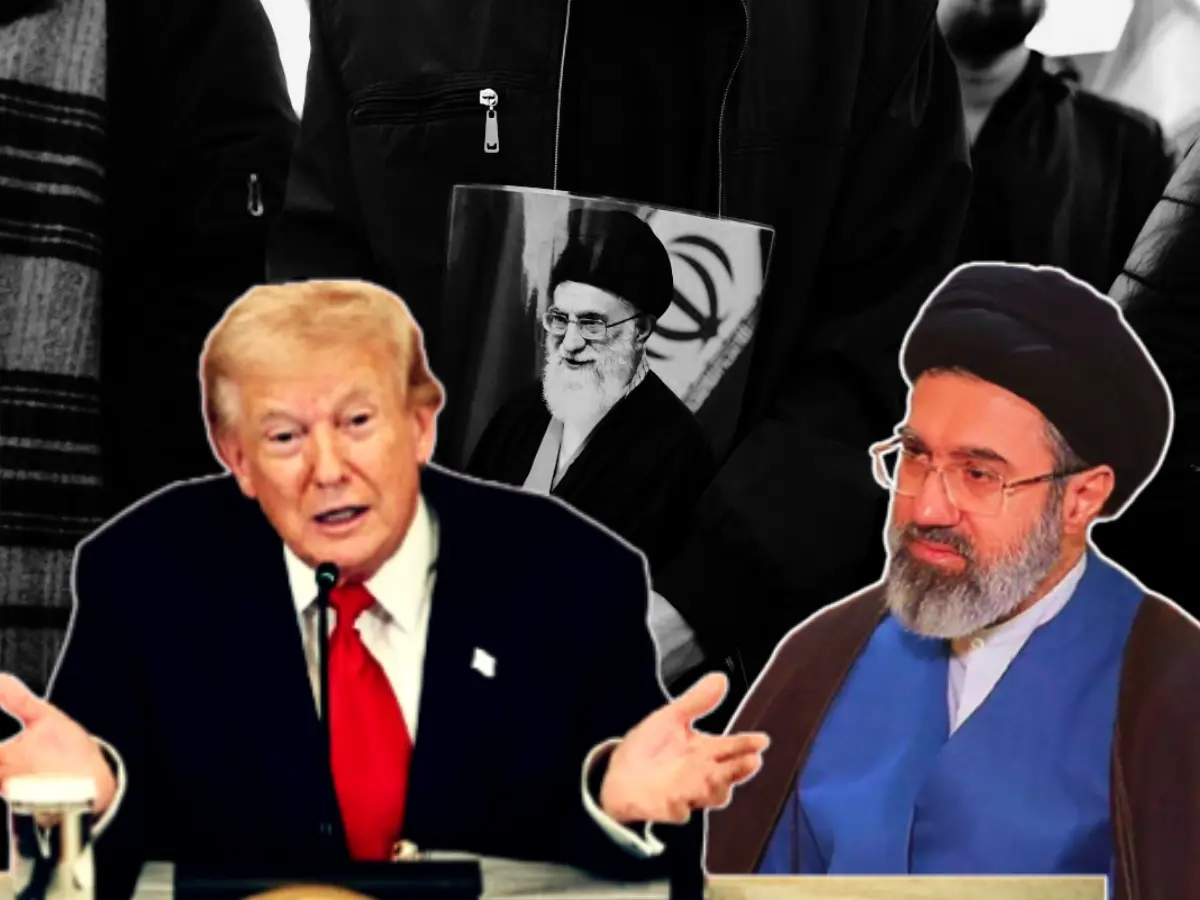
The geopolitical landscape of the Middle East is currently undergoing its most profound seismic shift since the 1979 Islamic Revolution. Following the decapitation of the Iranian regime’s senior echelons—most notably, the death of Supreme Leader Ayatollah Ali Khamenei in a joint U.S.-Israeli military strike on Feb. 28—the Islamic Republic faces an existential vacuum.
In a paradigm-shifting intervention, U.S. President Donald Trump has explicitly declared his intent to involve the United States in the selection of Iran’s next ruler. On March 8, the Assembly of Experts officially named Mojtaba Khamenei, the late ayatollah’s 56-year-old son, as the next leader—a decision that has set the stage for a total collision with the United States.
Speaking in an explosive Axios interview prior to that announcement, the president categorically rejected the succession of Khamenei, the late ayatollah’s son, dismissing him as a “lightweight” and drawing a direct parallel to the engineered political transition the United States executed in Venezuela with Delcy Rodríguez. This unapologetic assertion of American leverage over Tehran’s internal succession represents a generational opportunity to definitively end the regime’s 46-year campaign of state-sponsored terrorism.
Trump’s invocation of the “Venezuela model” signals a highly pragmatic, results-oriented evolution in American foreign policy. It marks a deliberate departure from the nebulous, often disastrous goal of total democratic nation-building, in favor of aggressive, targeted interference to secure a compliant leadership structure.
By publicly declaring Khamenei the younger “unacceptable,” the administration has drawn a non-negotiable red line. Mojtaba, a hardline cleric deeply entrenched within the Islamic Revolutionary Guard Corps (IRGC) and the Basij paramilitary forces, represents the absolute continuity of his father’s catastrophic policies. Allowing him to consolidate power would guarantee the perpetuation of Iran’s proxy warfare, its nuclear brinkmanship and its foundational obsession with the destruction of the State of Israel.
The stakes of this succession crisis cannot be marginalized. For more than four decades, the ideological mandate of the supreme leader has necessitated the exportation of radical Islamic revolution, paid for in the blood of American service members, Israeli civilians and global Jewish communities. From the devastating Hezbollah suicide bombings in Buenos Aires to the subterranean fortresses built by Hamas in Gaza, the logistical and financial trail leads directly to the supreme leader’s office.
Furthermore, the ideological contagion funded by Tehran has fueled the unprecedented surge of anti-Western radicalization on university campuses and has necessitated security upgrades and the militarization of synagogues worldwide. The West has paid an exorbitant price to contain a threat that is fundamentally ideological in nature.
The choice of Iran’s next leader will determine the trajectory of regional security for decades to come.
This unparalleled vulnerability provides Washington with the necessary leverage to enforce its will. Trump’s strategy recognizes that military strikes alone, while tactically necessary, are strategically insufficient if the ideological head of the serpent is allowed to regenerate. The United States must now marshal its full spectrum of national power, including crippling economic sanctions, intelligence operations and the credible threat of overwhelming military force, to block the ascension of any candidate tied to the IRGC’s terror apparatus.
For this strategy to succeed, the international community, led by Western defense establishments and Diaspora advocacy groups, must mobilize to lock in this policy. There must be a unified, bipartisan consensus that the United States will not tolerate the coronation of another hardliner. Policymakers must pressure allied nations to publicly support Washington’s vetting process and condition any future diplomatic engagement or sanctions relief on the verifiable dismantling of Iran’s proxy networks and the cessation of its anti-Western hostility.
The objective is not merely to select a leader who will bring temporary quiet, but to install an executive authority structurally constrained from exporting terror.
The Iranian regime is on its knees, and the window to dictate the terms of its future is remarkably narrow. If the West equivocates and permits a figure like Mojtaba Khamenei to assume the mantle of supreme leader, it will be condemning the Middle East to another generation of bloodshed and instability.
Trump has handed the free world a pragmatic playbook for neutralizing the greatest state sponsor of terrorism. It is an operational imperative that this strategy is executed without compromise. The choice of Iran’s next leader will determine the trajectory of regional security for decades to come; America must ensure that it makes the right choice.


1 comment:
From what I hear the guy was seriously injured in one of the attacks, lost a leg and may yet die. Damn shame. Or not.
Post a Comment