Leaked spy report warns Trump's Iran war faces disaster
By Sophie Gable
Daily Mail
Mar 7, 2026

A classified intelligence report has concluded that it is unlikely the US will initiate regime change. The report was reportedly dated just a week before the military operation began. Pictured above is a suburb of Beirut after Israeli strikes
A leaked classified report by the National Intelligence Council has shed an unfavorable light on Donald Trump's decision to strike Iran, warning that military involvement could be disastrous.
In just one week, tensions have dramatically risen in the region, starting with a joint military operation conducted by the US and Israel against Iran.
The strikes took out Supreme Leader Ayatollah Ali Khamenei, as Iran retaliated by targeting US military bases in the Gulf Cooperation Council.
Trump has stood firm on the military attack, but a report completed by the NIC just a week before raised doubts about the US's ability to overthrow the regime.
The NIC is a federal government agency that reports to the Director of National Intelligence. NIC members bridge 18 intelligence agencies with policymakers to provide analytical assessments.
Three people familiar with the findings told the Washington Post that Iran would likely respond to Khamenei's death by following protocols to preserve the regime. Sources said it was 'unlikely' that Iran's opposition would seize control.
Khamenei's successor has yet to be named. Iran's Assembly of Experts and high-ranking members of the Islamic Revolutionary Guard Corps have been tasked with naming his replacement.
The ayatollah's son, Mojtaba Khamenei, is rumored to be assuming the role, but Trump has previously called him 'incompetent' and a 'lightweight.'

Speculation has mounted that Mojtaba Khamenei, pictured above in 2019, will assume the role of Supreme Leader after his father's death

Strikes have continued across the Middle East following the joint military operation led by Israel and the US. Pictured is a Marine fighter jet
The Trump administration initially said the strikes were intended to take out Iran's nuclear capabilities, but in recent days has demanded 'unconditional surrender.'
The president has made it clear that he wants a say in Iran's leadership, telling NBC News: 'We want them to have a good leader. We have some people who I think would do a good job.'
Experts told the Washington Post that the NIC report coincides with how the Islamic Republic of Iran operates.
Holly Dagres, a senior fellow at the Washington Institute for Near East Policy, told the publication that bending the knee to Trump would go against 'everything they stand for.'
Suzanne Maloney, an Iran scholar and vice president at the Brookings Institution, agreed with the assessment: 'There’s no other force within Iran that can confront the remaining power that the regime has.'
'Even if they’re not able to project that power very effectively against their neighbors, they can certainly dominate inside the country.'
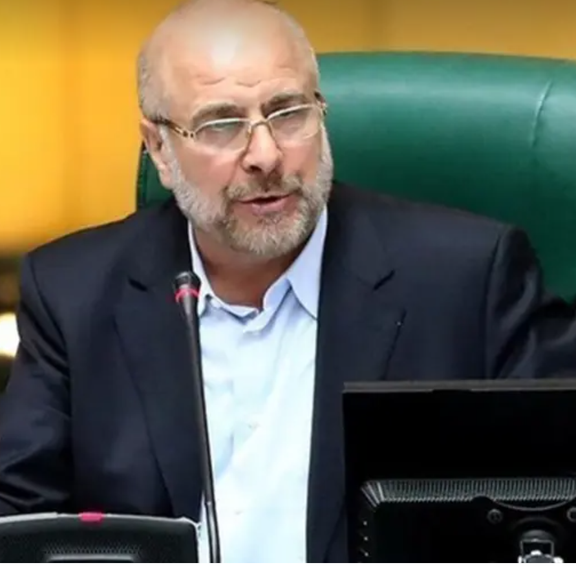
Mohammad Bagher Ghalibaf, Iran’s Parliament speaker, defiantly denied that Iranian leadership would cooperate with Trump's demands.
'The fate of dear Iran, which is more precious than life, will be determined solely by the proud Iranian nation, not by [Jeffrey] Epstein’s gang,' he wrote on X.

The president promised to continue striking Iran as tensions escalate in the region. He's pictured at a roundtable discussion on Friday at the White House

Military strikes in the Middle East have been ongoing for the last week. Pictured is the aftermath of an explosion in Tehran, Iran, on Saturday

Trump announced in a Truth Social post that Iran is no longer the 'bully' of the Middle East and will be 'hit very hard' on Saturday morning
The White House maintained Trump's position in a statement to the Washington Post, claiming that the Iranian regime is 'being absolutely crushed.'
'President Trump and the administration have clearly outlined their goals with regard to Operation Epic Fury: destroy Iran’s ballistic missiles and production capacity, demolish their navy, end their ability to arm proxies, and prevent them from ever obtaining a nuclear weapon,' the statement said.
Despite the recent assessment, Trump has remained confident in media interviews that the regime in Iran would soon fall.
During an interview with Politico on Thursday, the president maintained that the US would have a hand in influencing Iranian leadership.
'I’m going to have a big impact, or they’re not going to have any settlement, because we’re not going to have to go do this again,' he said.
Trump said 'people are loving what's happening' in Iran, adding: 'We’re taking out a threat to the United States of America, major threat, … and doing it like nobody’s ever seen before.'

Iranian President Masoud Pezeshkian apologized to Gulf neighbors for military strikes targeting their countries, as Trump has promised 'complete destruction' of Iran. Pictured is smoke from an explosion in Tehran on Saturday

GCC countries have been targeted in retaliatory strikes from Iran this past week. Pictured is the aftermath of an Israeli airstrike in Beirut's suburbs on Saturday
The president praised the operation in a post on Truth Social, boasting that Iran had been beaten 'to hell' and was forced to apologize to GCC countries for retaliatory strikes.
Countries in the GCC, including the United Arab Emirates, Qatar, Kuwait and Jordan were hit with a barrage of missiles this past week.
Iranian leadership has said the strikes were intended for US military bases, and citizens of GCC countries were not the target of the operation.
Iran's President Masoud Pezeshkian apologized to GCC countries in a video message on Saturday for the deadly drone and missile strikes.
'I should apologize to the neighboring countries that were attacked by Iran, on my own behalf,' he said.
'From now on, they should not attack neighboring countries or fire missiles at them, unless we are attacked by those countries. I think we should solve this through diplomacy.'
Pezeshkian delivered the message next to a picture of Khamenei, but did not directly address the Supreme Leader's slaying.
Despite the apology, the video was in no way a surrender, as the Iranian president vowed that the country's enemies 'must take their wish for the unconditional surrender of the Iranian people to their graves.'

Iran's Parliament Speaker Mohammad Bagher Ghalibaf, pictured above in February, issued a defiant message on social media refusing to meet Trump's demands of surrender
A statement issued by the Iranian Revolutionary Guards (IRGC) just hours after the video message claimed to have targeted bases in the UAE and Kuwait.
Qatar also confirmed it had intercepted an Iranian missile and issued a 'heightened' security alert to citizens.
As Trump and Pezeshkian issue defiant messages, hope for an end to military activity in the area has dwindled.
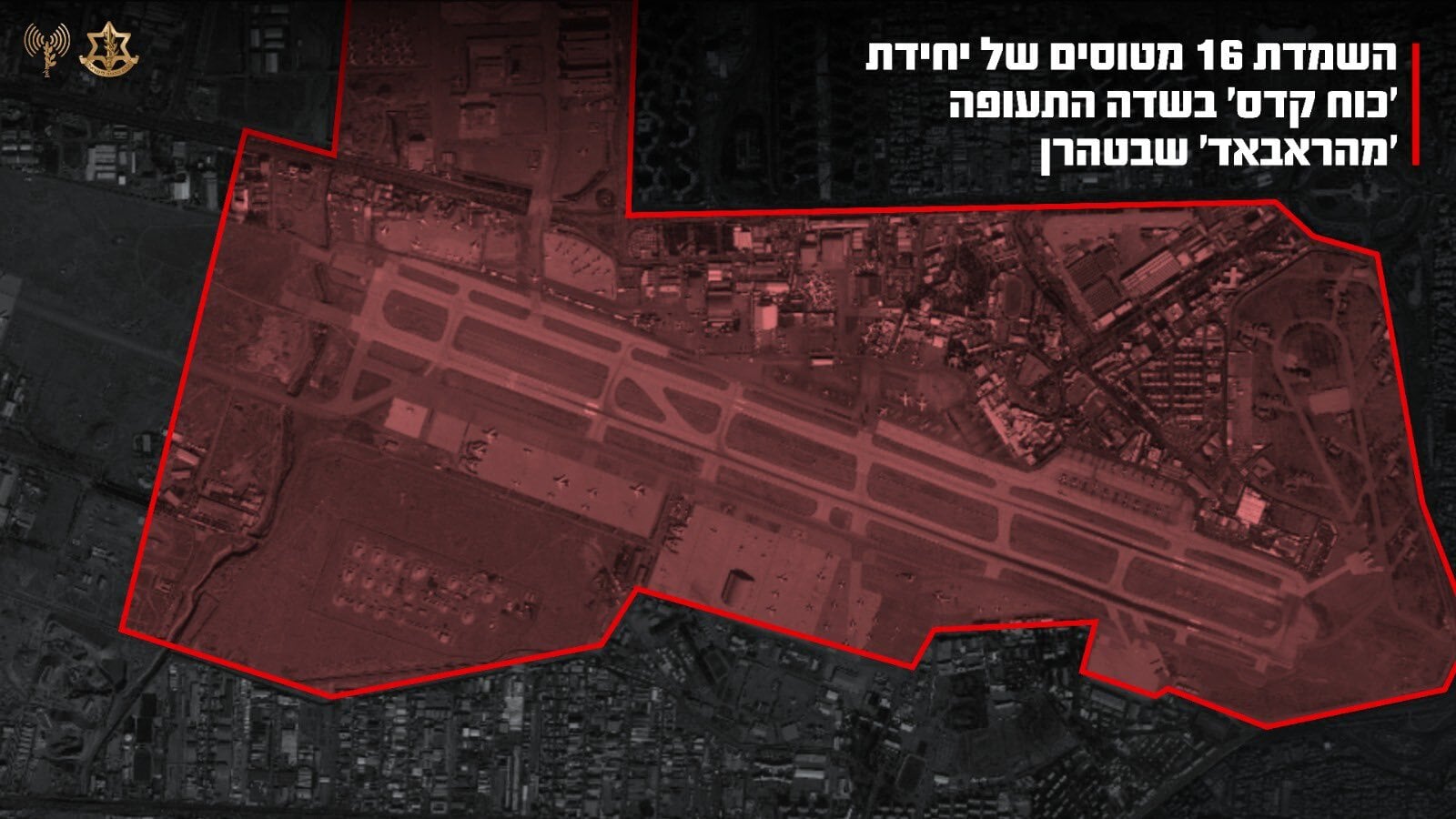
Warfare has continued in the area over the last week, as Israel led a fleet of 80 fighter jets in the early hours of Saturday morning against Tehran's Mehrabad International Airport, one of two that serve the capital.
Israel's broad military operations did not end there. The Israel Defense Forces have intensified attacks in Lebanon against the Iran-backed Hezbollah.
Israeli military forces launched a raid in eastern Lebanon, which resulted in at least 41 deaths, the New York Times reported, citing Lebanese officials and state media.
Iran also hit back on Saturday, with air raid alerts and explosions heard above Jerusalem as well as Gulf cities Dubai, Manama and near Riyadh - where Saudi Arabia intercepted a ballistic missile fired at an air base housing US military personnel.

The US and Israel have remained defiant in the pursuit of destroying Iranian nuclear capabilities. Pictured above is Israeli Prime Minister Benjamin Netanyahu and Trump at a news conference last December


Video footage has revealed an explosion near Dubai International Airport. The ongoing military conflict in the Middle East has severely impacted international travel
Video footage in Dubai revealed a potential drone strike near Dubai International Airport, a major hub for international travel.
The ongoing air strikes temporarily closed airspace over the Middle East. Airports have gradually resumed flight operations, but travel remains a headache for international passengers. The State Department is continuing to coordinate travel for Americans abroad.
Iran's Revolutionary Guards also said they had targeted the oil tanker Prima in the Gulf as it attempted to cross the narrow Strait of Hormuz, a key chokepoint for global shipping that Iran has effectively closed.
It has been reported that at least 1,230 people have been killed in Iran, more than 200 in Lebanon and 11 in Israel. Six US troops have also been killed.