Little island, long memory: Barbados and Jews
Eager to develop the area economically, the English were willing to tolerate Jewish settlement in ways Catholic empires rarely were.
By Michael Freund
JNS
Feb 21, 2026
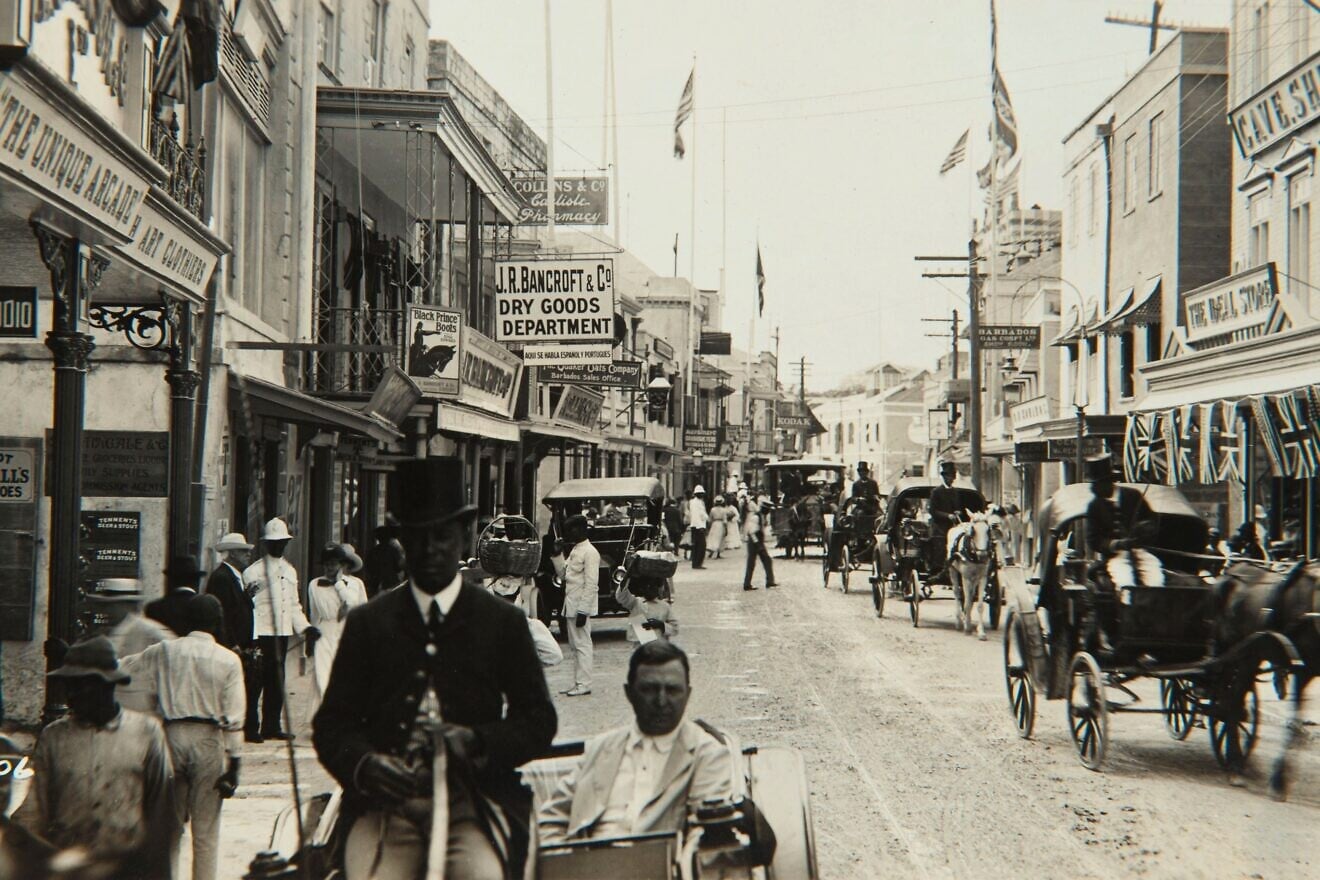
A whole host of places in the Diaspora Jewish historical imagination loom large: Berlin, Vilna, Warsaw, Marrakech and others. And then there are places that seem, at first glance, unlikely repositories of Jewish history: remote, sun-drenched outposts where the past unfolded far from the great centers of power.
Barbados is one of them.
This small Caribbean island, just 166 square miles in size and home to fewer than 300,000 people, sits closer to Venezuela than to Florida. Palm trees sway as winds blow gently, and tourists arrive seeking sand and surf. Yet beneath the postcard serenity lies an often overlooked chapter in the Jewish story—one that speaks not only of exile and survival, but of ingenuity, resilience and the quiet shaping of the modern world.
The Jewish presence in Barbados dates back to the mid-17th century, possibly as early as the late 1620s and certainly established by the mid-17th century. Its origins lie in one of the most traumatic upheavals of Jewish history: the Iberian expulsions.
Amid Spain’s expulsion of its Jews in 1492 and Portugal’s forcible conversion of 1497, many Jews became conversos—outwardly Christian but secretly Jewish. For generations, they lived double lives under the shadow of the Inquisition, always searching for a place where they could finally breathe as Jews again.
Some found it across the Atlantic.
By the 1650s, a group of Sephardic Jews—many of them refugees from Dutch Brazil after the Portuguese reconquest in 1654—made their way to Barbados, then an English colony. The English, eager to develop the island economically, were willing to tolerate Jewish settlement in ways Catholic empires rarely were. And so, in a world that offered Jews few safe harbors, Barbados became one.
They did not arrive as passive victims of history. They arrived as builders.
The Jews of Barbados contributed important commercial and technical knowledge, drawn from experience in Brazil, to the development of the island’s sugar economy. In doing so, they participated in the economic model that would define the Caribbean for centuries. These former refugees became agents of economic transformation in a new land, not through conquest but through knowledge.
In 1654, they established the Nidhe Israel synagogue, among the oldest in the Western Hemisphere, in Bridgetown, the capital of Barbados. For generations, its walls witnessed Jewish life unfolding thousands of miles from Europe: weddings and brit milahs, prayers for rain and for peace, merchants discussing trade routes alongside rabbis discussing Torah.
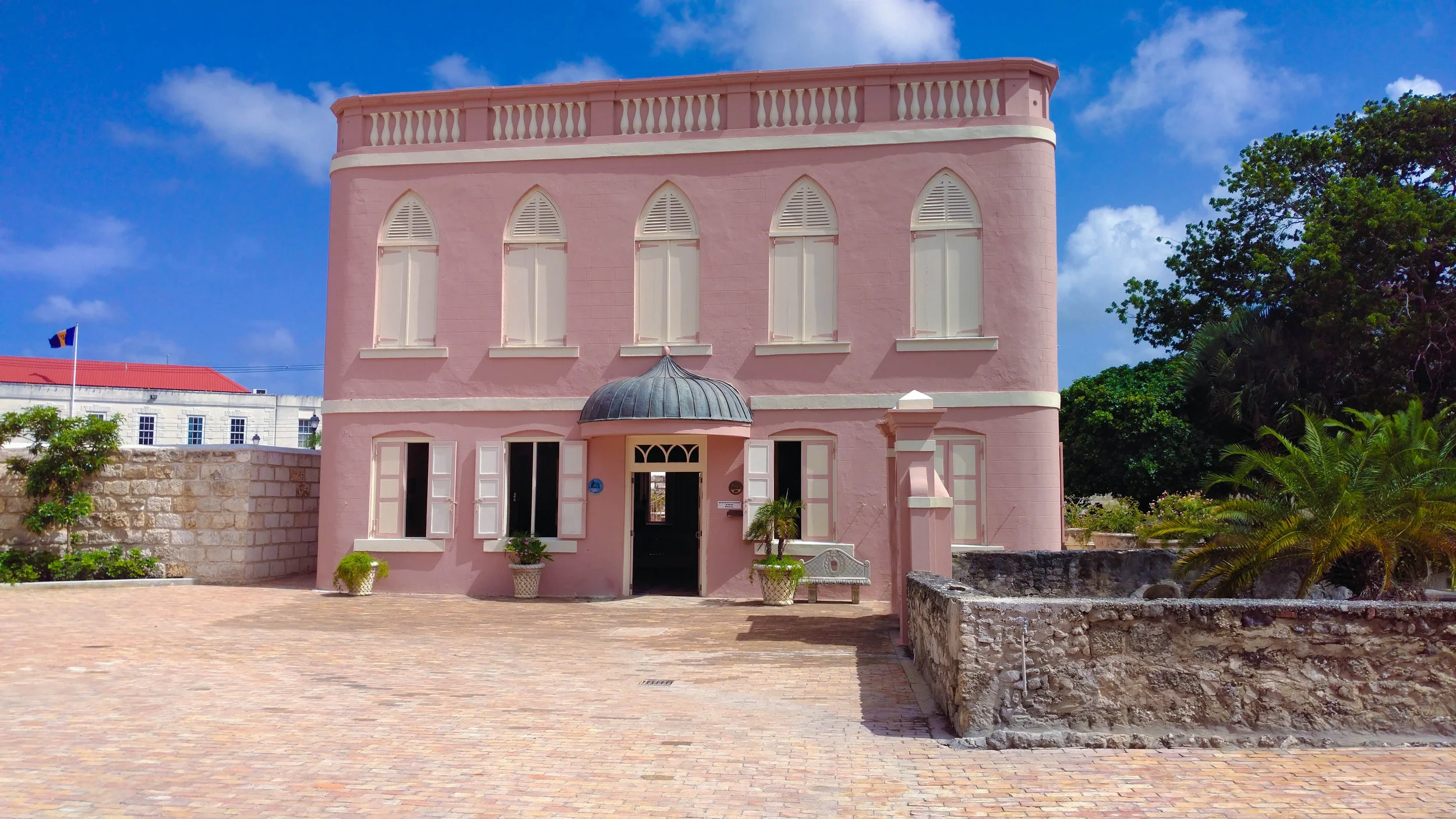 Nidhe Israel Synagogue in Bridgetown, the capital of the island of Barbados, in 2016.
Here was a Jewish community living openly, legally and confidently in the Americas decades before Jewish emancipation in Europe, reaching nearly 300 people by the late 1600s, and peaking at around 800, about 4% of the white population, by the mid-18th century.
Barbados offered something rare in Jewish history: normalcy.
Jews owned property. They traded internationally. They were not confined to ghettos. They could bury their dead in consecrated ground without fear that gravestones would be smashed overnight. Their cemetery, with Hebrew inscriptions weathered by centuries of salt air, remains a silent testimony to lives lived with dignity in an era when such dignity was often denied elsewhere.
And yet the story did not end on the island’s shores.
From Barbados, Jews moved onward to Suriname, Curaçao, Jamaica, and eventually, North America. In this way, the island became a bridge between Sephardic exile and American Jewish life. Some of the earliest Jewish commercial networks in the New World passed right through Bridgetown’s harbor before stretching toward Newport, R.I.; Charleston, S.C.; and New York.
It is not an exaggeration to say that a part of American Jewish history began in Barbados.
By the 20th century, however, the once-thriving community had dwindled, affected by shifting trade patterns and emigration, leading to the synagogue’s sale in 1928. Then history intervened once more.
As Nazi persecution tightened its grip on European Jewry in the 1930s, doors across the world slammed shut. Immigration quotas hardened, conferences produced sympathy, but few visas, and desperate families searched maps for any place, no matter how small, that would admit them as human beings rather than statistics.
In that dark hour, Barbados again became a refuge.
Beginning in the late 1930s, starting with arrivals like Moses Altman in 1931, the island admitted a modest number of Jewish refugees, primarily from Germany, Austria and Poland, including about 40 Polish Jewish families totaling 100 to 120 people by 1941. They arrived stripped of professions and property—doctors forbidden to heal, lawyers forbidden to practice, shopkeepers robbed of livelihood. They did not come to build fortunes; they came to escape annihilation.
The British colonial authorities imposed restrictions, and some refugees were initially classified as “enemy aliens,” a bitter irony for victims of Hitler. Yet they were alive. No deportation trains reached Bridgetown. No ghettos were sealed there. Children went to school, families prayed again, and German accents joined English and Bajan voices in the streets.
The island that had once sheltered Jews fleeing the Inquisition now sheltered Jews fleeing Auschwitz.
It did not save thousands. It saved dozens.
But Jewish history is not measured only in numbers. Every visa in the 1940s preserved a private universe: families, descendants and futures that would otherwise have been murdered. Some refugees later moved on to America or Israel; others remained, adding their memories to a community already centuries old.
Thus, Barbados became something extraordinary: a meeting point of two exiles, Sephardic and European, separated by 400 years but united by the same search for safety.
Today, the Jewish community in Barbados is tiny, numbering fewer than 100. For a time, the synagogue stood abandoned, reclaimed by sand and memory. But history has a way of resurfacing, sometimes literally.
When the site was excavated in 2008, archaeologists uncovered a mikvah buried beneath centuries of earth, its steps descending into still water, waiting. Dating to roughly 1650 to 1654 and fed by a natural spring, it is believed to be among the oldest ritual baths in the Americas. Nearby lies the synagogue cemetery, where roughly 400 graves—many from the 17th century, etched in Hebrew and worn by salt and time—form one of the earliest Jewish burial grounds in the Western Hemisphere.
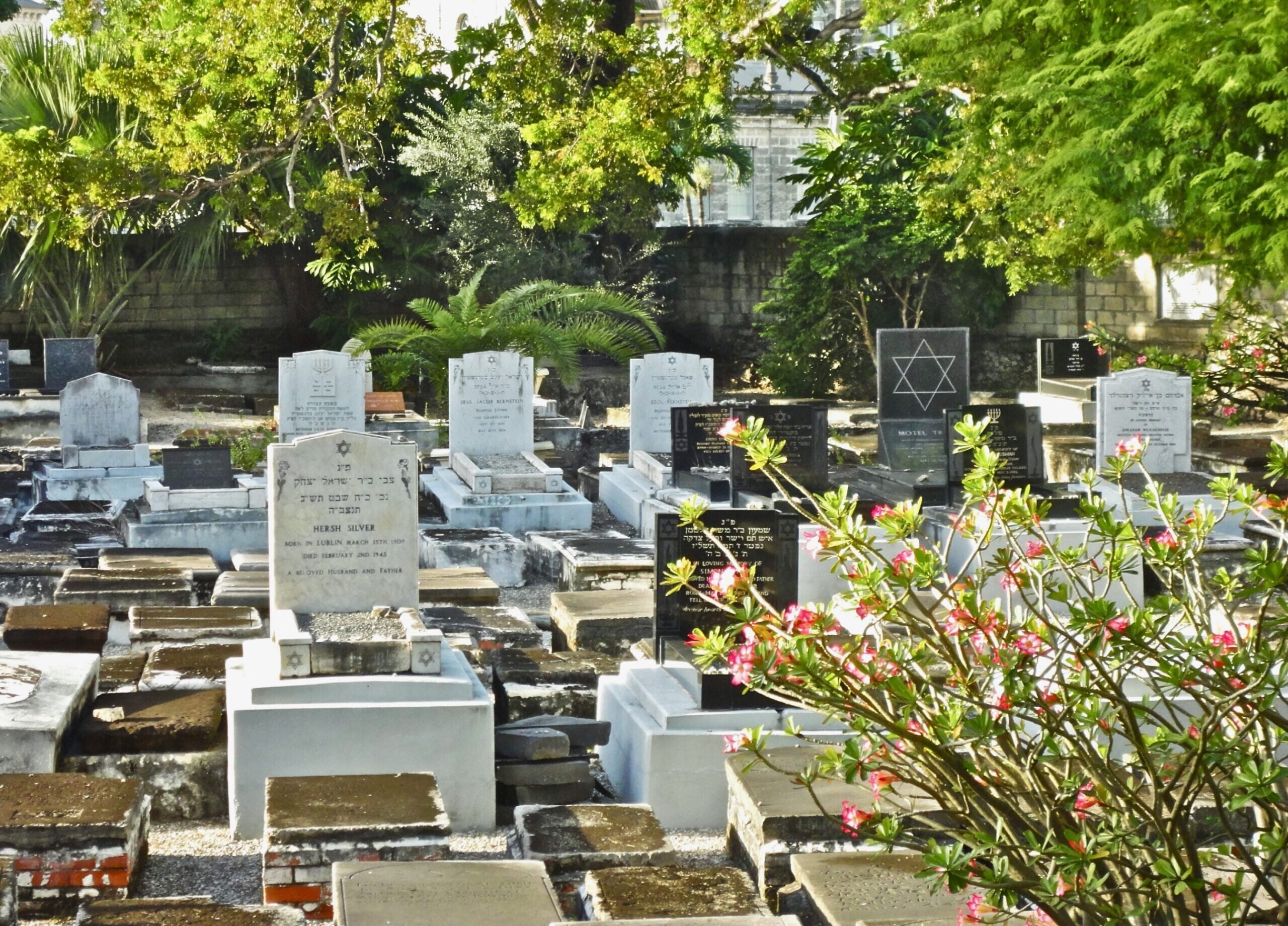
The Jewish cemetery in Bridgetown, the capital of Barbados, in 2011.
In recent decades, the synagogue has been restored, the cemetery preserved and the story retold as part of a UNESCO-protected World Heritage historic district. Visitors now walk its grounds and discover something quietly profound: Jewish history is not confined to the great capitals. It lives wherever Jews carried Torah, memory and stubborn hope.
Barbados reminds us that Jewish survival has never depended solely on numbers or power. Sometimes, it depended on trade winds, on tolerance born of economic pragmatism and on refugees who refused to surrender their identity.
We often imagine Jewish history as a march across continents driven only by catastrophe. But occasionally, it is also a story of opportunity, of communities that flourished in unexpected places and, in doing so, helped shape the modern Jewish world.
On a coral island in the Caribbean, Jews found freedom centuries before emancipation reached Europe, and refuge when Europe collapsed into barbarism. They built institutions, forged commerce and preserved tradition. And from that unlikely shore, their legacy quietly flowed outward into the Americas.
The beaches of Barbados may erase footprints within minutes. But the Jewish imprint there has lasted for nearly hundreds of years and is still going strong.


No comments:
Post a Comment