College of the Mainland drops $2,700 fee for early college students
By David Mercado
The Galveston County Daily News
Feb 26, 2026
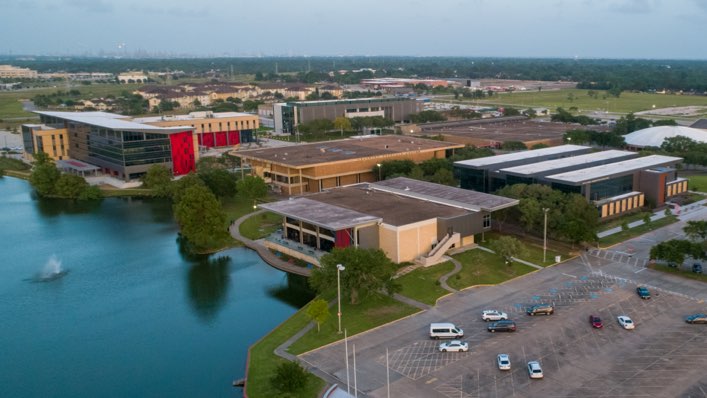
College of the Mainland
TEXAS CITY -- Students enrolled in College of the Mainland’s Collegiate High School program won’t have to pay a $2,700 annual fee starting fall 2026 after trustees voted Monday to eliminate the charge.
Trustees voted to waive the fee for students who qualify under the state’s Financial Aid for Swift Transfer program and to create a financial assistance program for students who don’t qualify but demonstrate financial need.
“At College of the Mainland, making education accessible to every student is our responsibility,” President Dr. Helen Brewer said. “When state funding allows us to reinvest directly back into our students, we do. Removing this fee protects opportunity for families and strengthens the long-term economic future of our region.”
The fee was previously covered by participating school districts. Several districts notified the college they’d stop covering the cost for the 2026-27 academic year and instead require families to pay it, college officials said.
The Collegiate High School program currently enrolls 249 students. Of those, 146 qualify under the state program and 103 don’t, according to college records.
Under the state’s funding formula, the college receives $58.52 per credit hour for eligible students. That amount includes reimbursement for standard tuition plus a $27.52 supplement, which offsets the loss of the annual program fee, administrators said.
Before the change, program revenue relied on two sources: a $31 per credit hour fee and the $2,700 annual program fee.
With the state reimbursement in place, projected revenue under the revised structure totals about $598,800, covering the program’s budget without creating a deficit, administrators said.
The program has surplus grant funding from previous years that could help stabilize the budget if enrollment shifts.
The Collegiate High School program is one of two dual-credit options offered by the college. In traditional dual credit, students take college-level courses at their high school, online or on the college campus and pay tuition under standard dual-credit arrangements.
In the Collegiate High School pathway, students attend classes on the college campus in a structured cohort while completing high school graduation requirements. Many graduate with an associate degree before earning their high school diploma, reducing the time and cost required to complete a bachelor’s degree, officials said.
The revised fee structure takes effect in fall 2026. Additional details about the financial assistance program are expected to be shared with families and partner districts ahead of the 2026-27 academic year, according to the college.
EDITOR'S NOTE: My son recently took me by COM where I taught from 1970-1993. I didn't recognize the place because it was now 10 times as large as when I was there.


1 comment:
Hell Howie, I thought when you started teaching a college was a bench under a tree and all the professors wore togas and spoke Attic Greek.
Post a Comment