The quiet conquest: Adaptive Islamism in American institutions and the Texas response
Its development is no longer an abstract debate, but a political actor operating through community institutions, universities, nonprofits and municipal governments.
By Amine Ayoub
JNS
Nov 28, 2025
The United States is entering a critical phase in its encounter with political Islam. For decades, Washington viewed Islamism primarily through the prism of counterterrorism, assuming that the absence of violence signaled the absence of threat. Europe learned too late that nonviolent Islamism can be far more enduring because it works within democratic systems rather than against them. The same adaptive strategy is now visible in the United States, and the patterns are unmistakably similar.
Islamism in its modern form does not attempt to replace the state through force. It attempts to reorient institutions from within by converting religious identity into political authority. The movement relies on the protections of liberal democracy, using civic participation and cultural legitimacy to advance a political worldview that ultimately rejects the very foundations of pluralism. Its objective is not representation but primacy.
Once institutional footholds are secured, influence deepens through continuity rather than confrontation. The cumulative result is the emergence of a parallel civic structure that competes with, rather than integrates into, the American model of governance. Islamism succeeds not by attacking institutions but by inhabiting them. It advances through legitimacy, not subversion. It grows through continuity and repetition, not rupture. It reshapes expectations of representation and authority in ways that are subtle, durable and difficult to reverse once established.
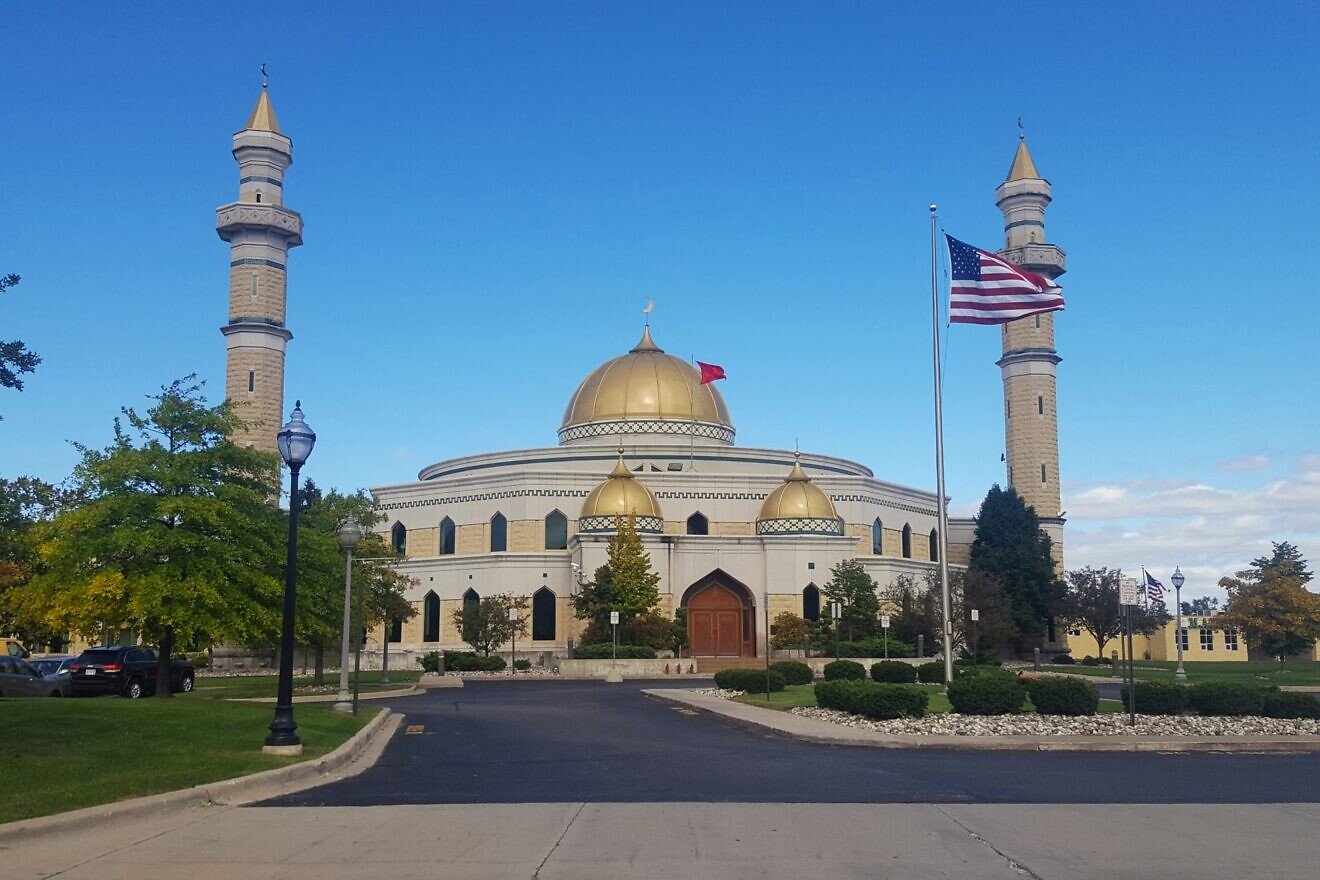
The transformation of Dearborn, Mich., provides a clear example of how ideological networks can dominate local governance. The city outside Detroit is home to one of the largest and most concentrated Arab and Muslim populations in the United States, with estimates suggesting that the Arab American population, which is predominantly Muslim, makes up more than 40% of the city’s total population.
The 2022 school board upheaval was not an isolated cultural dispute but a crucial flashpoint resulting from the rapid, coordinated mobilization of community structures, predominantly led by conservative religious parents. The controversy began when parents protested the availability of certain books in high school and middle-school libraries. The books, many of which contained LGBTQ+ themes or explicit sexual content, were deemed inappropriate and incompatible with their religious and family values.
This dispute quickly converted religious identity into a focused political authority. School-board meetings became intensely confrontational, leading to the eventual removal or restriction of some challenged books. More significantly, the incident became a decisive factor in subsequent local elections, translating mobilization into electoral action that led to the selection of new school-board members seen as more responsive to the demands of the conservative parent base.
What happened in Dearborn mirrors earlier European experiences, where municipal battles over curriculum and public service norms became early theaters of Islamist political consolidation.
The university system represents a second arena undergoing subtle reorientation. The long-standing presence of the Muslim Students Association has evolved into a broader ecosystem in which religious identity politics and Islamist-derived frameworks often merge. College campuses in Michigan, New York, California and Illinois now host a generation of activists who approach political Islam as a cultural or anti-colonial narrative rather than a governance ideology.
This shift has long-term policy consequences. Students shaped by this environment move into nonprofit work, civil-rights organizations, media and local government, carrying with them a worldview that normalizes Islamist political concepts within American institutions. The rise of Zohran Mamdani, soon to be mayor of New York City, illustrates how these networks eventually convert cultural legitimacy into political authority, with his rhetoric on Middle Eastern affairs often mirroring the discourse of transnational Islamist movements.
The nonprofit sector adds a further layer of complexity. Organizations previously scrutinized by federal authorities have demonstrated an ability to survive investigations and emerge with renewed legitimacy through procedural protections and the opacity of the charitable regulatory system. The effect is an ecosystem in which ideological movements can access funding, build institutional continuity and position themselves as community representatives even when their political goals contradict the preferences of most Muslim Americans.
The presence of explicit Islamist movements, such as Hizb ut-Tahrir America, reveals another critical dimension; although nonviolent, the group openly calls for replacing secular governance with a religious political order, underscoring the permissive environment Islamist movements have learned to navigate.

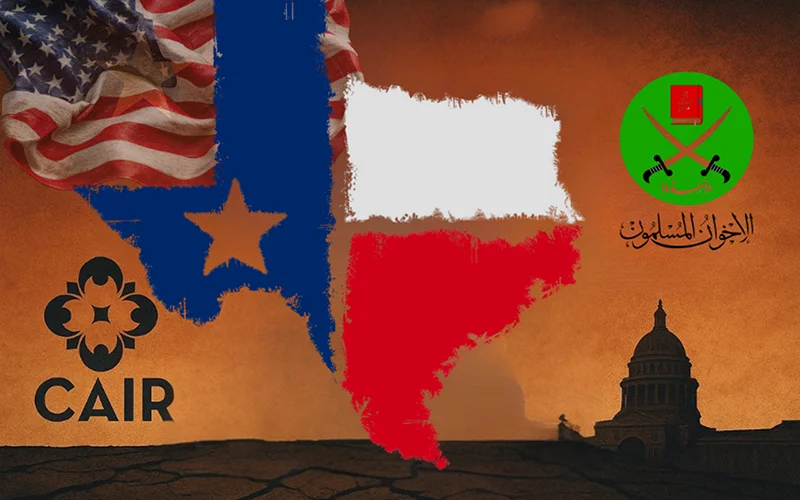
Texas Gov. Greg Abbott officially designated the Muslim Brotherhood and the Council on American-Islamic Relations (CAIR) as state-level Foreign Terrorist and Transnational Criminal Organizations on November 18.
The ongoing activities of these groups have prompted a sharp, escalatory response from some U.S. political leaders. On Nov. 18, Texas Gov. Greg Abbott declared the Council on American-Islamic Relations (CAIR) and the Muslim Brotherhood as Foreign Terrorist Organizations (FTOs) under Texas state law, stating that the move was necessary due to the groups’ actions to “support terrorism across the globe and subvert our laws through violence, intimidation and harassment.”
The designation prohibits these organizations from acquiring property in the state and authorizes legal action by the state attorney general to shut down affiliated entities. This action marks a massive escalation in Abbott’s confrontation with Muslim organizations and communities in Texas, and it drew immediate legal and political scrutiny because states have no authority to designate FTOs on behalf of the U.S. government. Under the Immigration and Nationality Act, only the U.S. Secretary of State can officially make such a designation.
The impact of Abbott’s action is limited to Texas state law enforcement and authorizes civil legal action, carrying no federal immigration consequences, asset-freezing powers or criminal penalties that accompany legitimate federal FTO designations. CAIR, a Washington-based Muslim civil-rights organization that has consistently rejected accusations of terrorist ties, responded by calling Abbott an “Israel First politician” stoking “anti-Muslim hysteria” and noted that the group has previously sued Abbott successfully for First Amendment violations.
This state action follows a contentious period in Texas, including months of state action against Epic City, a proposed 400-acre Muslim community development near Dallas, which Abbott referred to as a “sharia compound.” Abbott has been vocal in asserting that “the Muslim Brotherhood and CAIR have long made their goals clear: to forcibly impose sharia law and establish Islam’s ‘mastership of the world.’”
Islamism in the United States is no longer an abstract debate. It is a political actor operating through community institutions, universities, nonprofits and municipal governments.
Understanding its adaptive strategies—and the varied governmental responses they provoke—is the first requirement for preserving a civic landscape that remains genuinely pluralistic.
EDITOR'S NOTE:

The Clear Lake Islamic Center is just a short distance from my home.


2 comments:
Islamism is here. They are sitting own school boards and municipal entity boards that control funding and government functions. I wonder how many Muslims are working for NASA or Nasa Contractors.
When Muslims are in the minority they are very concerned with minority rights, when they are in the majority there are no minority rights - Winston Churchill
Post a Comment