Another UN resolution, another exercise in futility
From 1947 to today, every chance for Palestinian statehood has been rejected. No declaration in New York will change that reality.
By Stephen M. Flatow
JNS
Sep 16, 2025
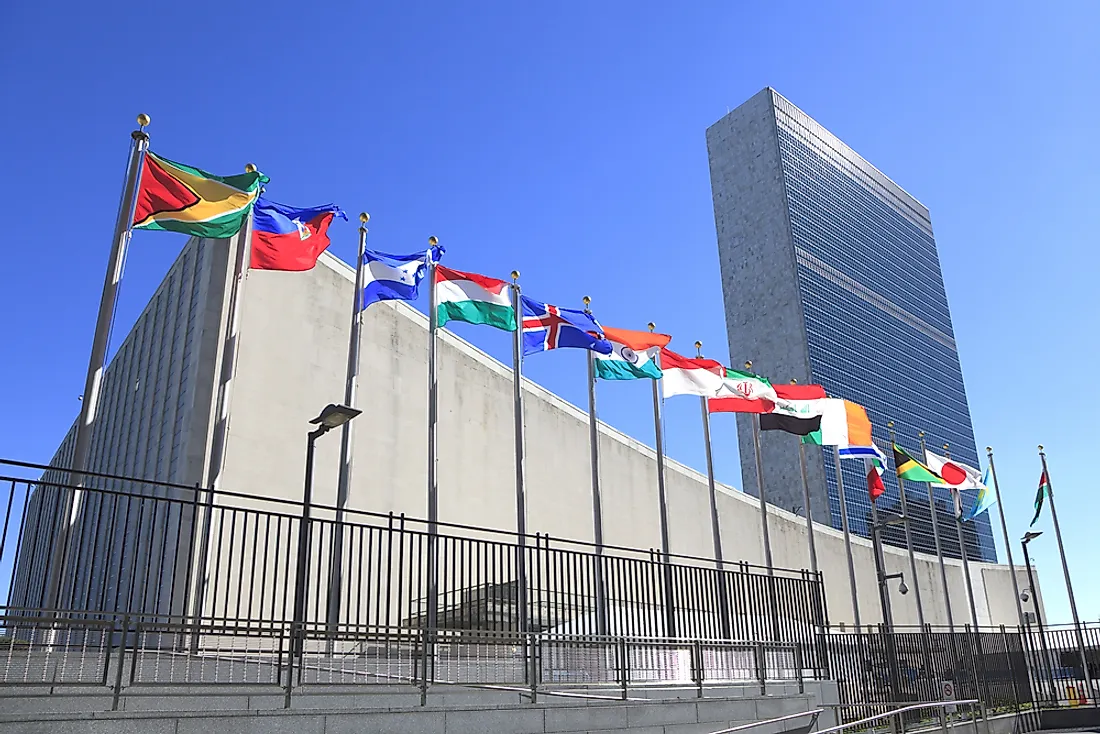
The headquarters of the United Nations in New York. The U.N. General Assembly has once again
stepped onto the stage of the Israeli-Palestinian conflict with grand
declarations and high-minded pronouncements. Just last week, it voted to
endorse a seven-page declaration that outlines “tangible, timebound and
irreversible steps” toward a two-state solution.
The resolution was backed by Gulf Arab
states and European powers, boycotted by the United States and Israel,
and condemned by Jerusalem as a “publicity stunt.”
And a stunt it is.
It is worth reminding ourselves—and the
diplomats in New York—that this is hardly the first time that the United
Nations has promised to deliver a Palestinian state. In fact, the very
body that gathered this past Friday voted for just that in 1947.
Resolution 181, known as the Partition Plan, proposed the division of British-ruled Palestine into a Jewish state and an Arab state, with Jerusalem under international control.
The Jewish leadership reluctantly accepted
the plan, understanding that it was far from perfect but represented a
historic opportunity. The Arab world, on the other hand, rejected it
outright and chose war instead.
The Jewish state was born. The Arab state never was.
Seventy-seven years later, that
international body is still talking about creating one. What does that
say about the seriousness of these resolutions?
The fundamental fact that diplomats prefer
to ignore is that the Palestinians have had multiple opportunities to
establish their own state, and each time they have chosen rejectionism
and violence. The 1947 partition plan. The 2000 Camp David talks, when
Israeli Prime Minister Ehud Barak offered Yasser Arafat nearly
everything he claimed to want. The 2008 Annapolis process, when Israeli
Prime Minister Ehud Olmert went even further.
In each case, the answer from the Palestinian leadership was “no”—or worse, a new wave of terrorism.
The current resolution, like so many
before it, tries to skirt this history. Instead, it pretends that peace
is only a matter of more conferences, more paperwork and more signatures
on symbolic declarations. But there is nothing tangible, time-bound or
irreversible about demanding concessions from Israel while holding the
Palestinians to no standard of accountability whatsoever.
Consider the grotesque irony of the United
Nations condemning both Hamas’s atrocities and Israel’s defensive
actions in the same breath. On Oct. 7, 2023, Hamas launched the
deadliest attack on Jews since the Holocaust, massacring civilians,
kidnapping children and burning entire families alive in their homes.
Yet somehow, in the halls of Turtle Bay, Israel’s efforts to dismantle
the Hamas terror organization are given equal moral standing with the
terrorists’ crimes. That moral equivalence alone should disqualify the
United Nations from being taken seriously as an arbiter of peace.
The United States and Israel rightly
boycotted the July conference that produced this declaration, co-hosted
by Saudi Arabia and France. It was clear from the outset that it would
be another round of diplomatic theater, aimed not at resolving the
conflict but at isolating Israel. No one in Riyadh or Paris truly
believes that a U.N. vote will erase decades of Palestinian
rejectionism. But it plays well in Arab capitals and provides European
leaders with a chance to posture as peacemakers without dealing with the
hard truths.
The hard truth is this: Palestinian
statehood cannot be willed into existence by international resolutions.
It can only come about through direct negotiations with Israel, based on
recognition of the Jewish nation’s legitimacy and a commitment to
peaceful coexistence.
Neither of those preconditions exists
today. The Palestinian Authority glorifies terrorists, pays stipends to
murderers in Israeli jails and rejects recognition of Israel as the
nation-state of the Jewish people. Hamas and Palestinian Islamic Jihad
openly declare their goal to destroy Israel and its people. How, then,
can any serious person talk about “irreversible steps” toward a
two-state solution?
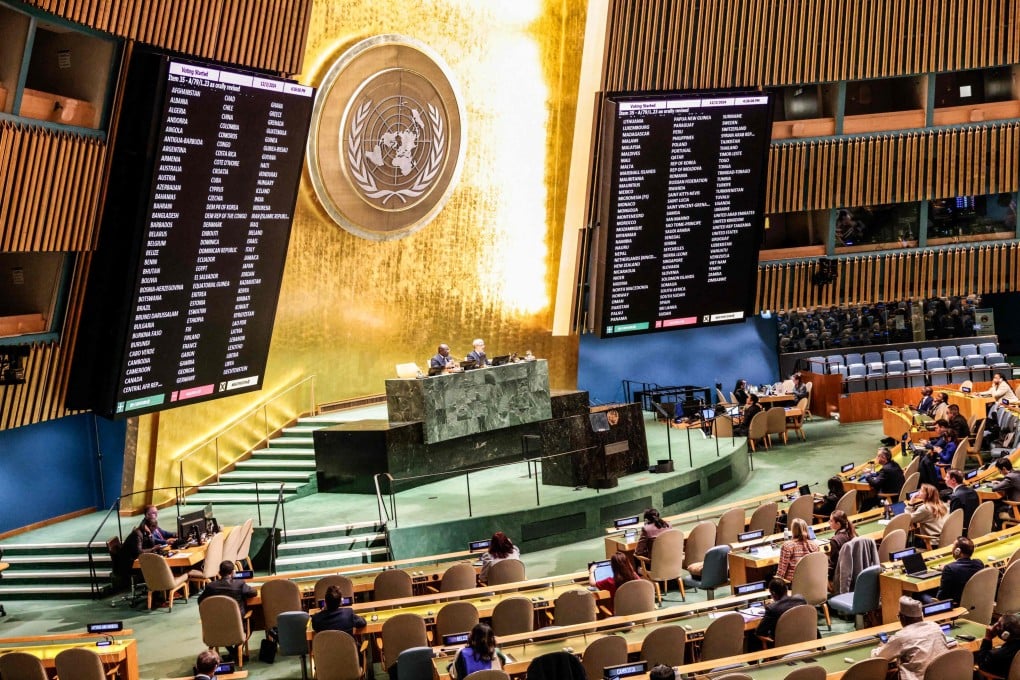
The UN General Assembly
U.N. diplomats love to use the language of
inevitability. They speak as though history bends inexorably toward
their preferred outcome. But history has already spoken. The Arabs could
have had a state in 1947, but they chose war. They could have had a
state in 2000 and 2008, but they chose terrorism. Even today, the
Palestinian leadership refuses to make peace, preferring to keep its
people in perpetual grievance.
What the world body is really doing with
resolutions like this one is perpetuating that grievance. Each new
declaration tells the Palestinians that they don’t have to compromise,
don’t have to reform, don’t have to recognize Israel. Just sit back, and
the world will deliver you a state on a silver platter. That message is
not just misguided. It is dangerous. It fuels more rejectionism, more
extremism and more violence.
Meanwhile, Israel continues to build a
thriving, democratic society under constant threat. It has made peace
with Egypt, with Jordan, and through the Abraham Accords,
with several Arab states. Those breakthroughs happened not because of
U.N. resolutions but because leaders in Cairo, Amman, Abu Dhabi and
Manama decided that peace and progress were preferable to endless war.
If Palestinian leaders ever make the same
decision, peace with Israel will follow. Until then, the United Nations
can churn out as many declarations as it likes. They will be as
meaningless as the ones that came before.
The United Nations loves words like
“tangible,” “timebound” and “irreversible.” But for nearly eight
decades, its resolutions on Israel and the Palestinians have been
anything but. What is truly irreversible is the reality that Israel
exists, will continue to exist and will defend itself against those who
seek its destruction. That is the one fact the United Nations should
accept—if it truly wishes to be relevant.
The U.N. General Assembly has once again stepped onto the stage of the Israeli-Palestinian conflict with grand declarations and high-minded pronouncements. Just last week, it voted to endorse a seven-page declaration that outlines “tangible, timebound and irreversible steps” toward a two-state solution.
The resolution was backed by Gulf Arab states and European powers, boycotted by the United States and Israel, and condemned by Jerusalem as a “publicity stunt.”
And a stunt it is.
It is worth reminding ourselves—and the diplomats in New York—that this is hardly the first time that the United Nations has promised to deliver a Palestinian state. In fact, the very body that gathered this past Friday voted for just that in 1947. Resolution 181, known as the Partition Plan, proposed the division of British-ruled Palestine into a Jewish state and an Arab state, with Jerusalem under international control.
The Jewish leadership reluctantly accepted the plan, understanding that it was far from perfect but represented a historic opportunity. The Arab world, on the other hand, rejected it outright and chose war instead.
The Jewish state was born. The Arab state never was.
Seventy-seven years later, that international body is still talking about creating one. What does that say about the seriousness of these resolutions?
The fundamental fact that diplomats prefer to ignore is that the Palestinians have had multiple opportunities to establish their own state, and each time they have chosen rejectionism and violence. The 1947 partition plan. The 2000 Camp David talks, when Israeli Prime Minister Ehud Barak offered Yasser Arafat nearly everything he claimed to want. The 2008 Annapolis process, when Israeli Prime Minister Ehud Olmert went even further.
In each case, the answer from the Palestinian leadership was “no”—or worse, a new wave of terrorism.
The current resolution, like so many before it, tries to skirt this history. Instead, it pretends that peace is only a matter of more conferences, more paperwork and more signatures on symbolic declarations. But there is nothing tangible, time-bound or irreversible about demanding concessions from Israel while holding the Palestinians to no standard of accountability whatsoever.
Consider the grotesque irony of the United Nations condemning both Hamas’s atrocities and Israel’s defensive actions in the same breath. On Oct. 7, 2023, Hamas launched the deadliest attack on Jews since the Holocaust, massacring civilians, kidnapping children and burning entire families alive in their homes. Yet somehow, in the halls of Turtle Bay, Israel’s efforts to dismantle the Hamas terror organization are given equal moral standing with the terrorists’ crimes. That moral equivalence alone should disqualify the United Nations from being taken seriously as an arbiter of peace.
The United States and Israel rightly boycotted the July conference that produced this declaration, co-hosted by Saudi Arabia and France. It was clear from the outset that it would be another round of diplomatic theater, aimed not at resolving the conflict but at isolating Israel. No one in Riyadh or Paris truly believes that a U.N. vote will erase decades of Palestinian rejectionism. But it plays well in Arab capitals and provides European leaders with a chance to posture as peacemakers without dealing with the hard truths.
The hard truth is this: Palestinian statehood cannot be willed into existence by international resolutions. It can only come about through direct negotiations with Israel, based on recognition of the Jewish nation’s legitimacy and a commitment to peaceful coexistence.
Neither of those preconditions exists today. The Palestinian Authority glorifies terrorists, pays stipends to murderers in Israeli jails and rejects recognition of Israel as the nation-state of the Jewish people. Hamas and Palestinian Islamic Jihad openly declare their goal to destroy Israel and its people. How, then, can any serious person talk about “irreversible steps” toward a two-state solution?
The UN General Assembly
U.N. diplomats love to use the language of inevitability. They speak as though history bends inexorably toward their preferred outcome. But history has already spoken. The Arabs could have had a state in 1947, but they chose war. They could have had a state in 2000 and 2008, but they chose terrorism. Even today, the Palestinian leadership refuses to make peace, preferring to keep its people in perpetual grievance.
What the world body is really doing with resolutions like this one is perpetuating that grievance. Each new declaration tells the Palestinians that they don’t have to compromise, don’t have to reform, don’t have to recognize Israel. Just sit back, and the world will deliver you a state on a silver platter. That message is not just misguided. It is dangerous. It fuels more rejectionism, more extremism and more violence.
Meanwhile, Israel continues to build a thriving, democratic society under constant threat. It has made peace with Egypt, with Jordan, and through the Abraham Accords, with several Arab states. Those breakthroughs happened not because of U.N. resolutions but because leaders in Cairo, Amman, Abu Dhabi and Manama decided that peace and progress were preferable to endless war.
If Palestinian leaders ever make the same decision, peace with Israel will follow. Until then, the United Nations can churn out as many declarations as it likes. They will be as meaningless as the ones that came before.
The United Nations loves words like “tangible,” “timebound” and “irreversible.” But for nearly eight decades, its resolutions on Israel and the Palestinians have been anything but. What is truly irreversible is the reality that Israel exists, will continue to exist and will defend itself against those who seek its destruction. That is the one fact the United Nations should accept—if it truly wishes to be relevant.


No comments:
Post a Comment