Francesca Albanese’s campaign against Zionism
The U.N. special rapporteur's claim that the Zionist movement is “the problem” because it created Israel collapses decades of history into a dishonest narrative.
By Fiamma Nirenstein
JNS
Nov 11, 2025
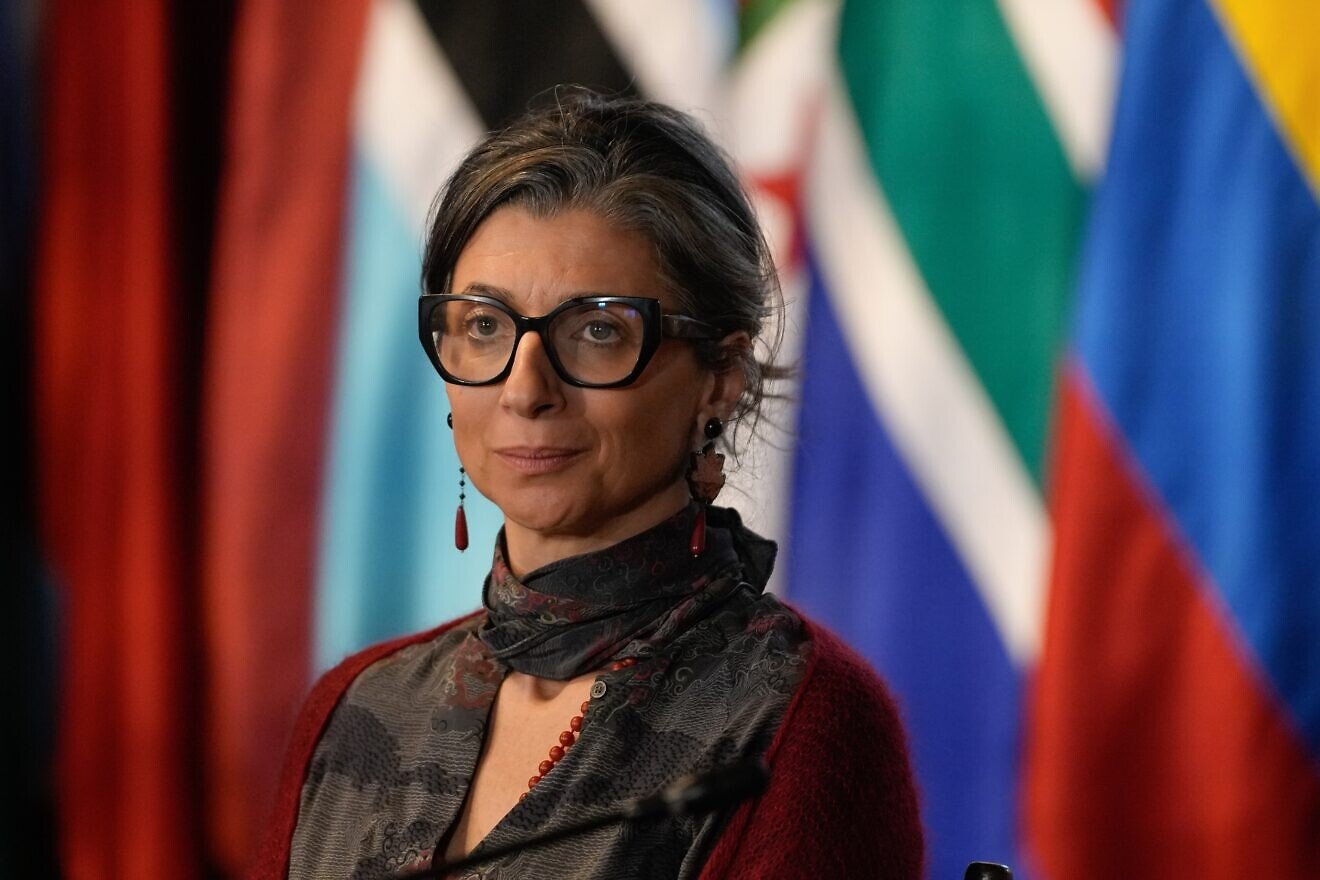
When a public intellectual arms herself with a lexicon of genocide, apartheid and ethnic cleansing and broadcasts those terms as incontrovertible facts, culture and history die a little.
The recent interview of Francesca Albanese, the U.N. special rapporteur for Palestinian rights, published in the Italian newspaper Corriere della Sera, contained more than misinformation; it was a manifesto for the erasure of the Jewish state.
I have long refused to dignify Albanese with a formal debate—not out of timidity, but out of principle. To breathe the same air as someone who repeatedly traffics in demonstrable falsehoods is to concede a moral equivalence that does not exist.
Her latest claim—that Zionism itself is “the problem” because it created the State of Israel, which she sees as an apartheid state occupying a land once called Palestine—collapses decades of history into a single, dishonest sentence.
It is worth reminding readers of the simple facts that Albanese elides. For much of the nineteenth and early twentieth centuries, Jews called themselves Palestinians; former Israeli prime minister Golda Meir was one of them.
The modern Arab populations in the British Mandate era were not static indigenous blocs but peoples on the move from neighboring regions. The British Mandate, sanctioned by the international community after the collapse of the Ottoman Empire, provided the legal framework for Jewish return to the Land of Israel.
Partition and subsequent wars created the borders and complexities we live with today. The modern Palestinian national movement emerged later—in the 1960s and ’70s—nurtured by geopolitical forces and ideologies abroad. To erase that chronology is to erase causality itself.
Albanese’s rhetorical sleight of hand is not an innocent error of interpretation. It serves an objective: the dismantling of the State of Israel’s legitimacy.
When public discourse converts complex legal and historical disputes into blanket moral indictments, it stops being debate and starts being demolition. Worse, when major media outlets and influential institutions amplify such claims without scrutiny, they compound the damage.
This is not merely an academic quarrel. Words such as “genocide” and “apartheid” are weighty—and rightly so. They require rigorous sourcing, careful contextualization and a willingness to reckon honestly with uncomfortable facts, including the atrocities perpetrated by Islamist groups that deny Israel’s right to exist.
Albanese’s habit of citing inflated figures, recycled accusations and selective narratives creates not illumination but a fog that shields the architects of violence and delegitimizes the very victims she pretends to champion.
History teaches us a cautionary lesson: delegitimization precedes dispossession. The politics of the present too often forget what history remembers—that singling out one people and rewriting their origins is the first step down a dark path.
We have seen how propaganda can prepare hearts and bureaucracies for moral crimes. We should resist any language that normalizes such processes under the guise of moral clarity.
Disagreement with Israeli policy is legitimate; calling for accountability is necessary. But there is a vast difference between critique and a project of erasure. Albanese’s narrative crosses that line. It seeks not to reform or to negotiate, but to expunge.
If we care about truth, about memory, about the fragile ethics that prevent history from repeating its worst chapters, we must call this out plainly. Intellectual responsibility demands more than slogans; it demands fidelity to facts, to context and to the full complexity of human events.
Anything less is a funeral for culture—and we cannot afford another one.


No comments:
Post a Comment