The axis the US just struck
For China, Venezuelan oil offered something strategically valuable: a stable supply outside the Middle East, insulated from American naval interdiction.
By Morielle Lotan
JNS
Jan 5, 2026
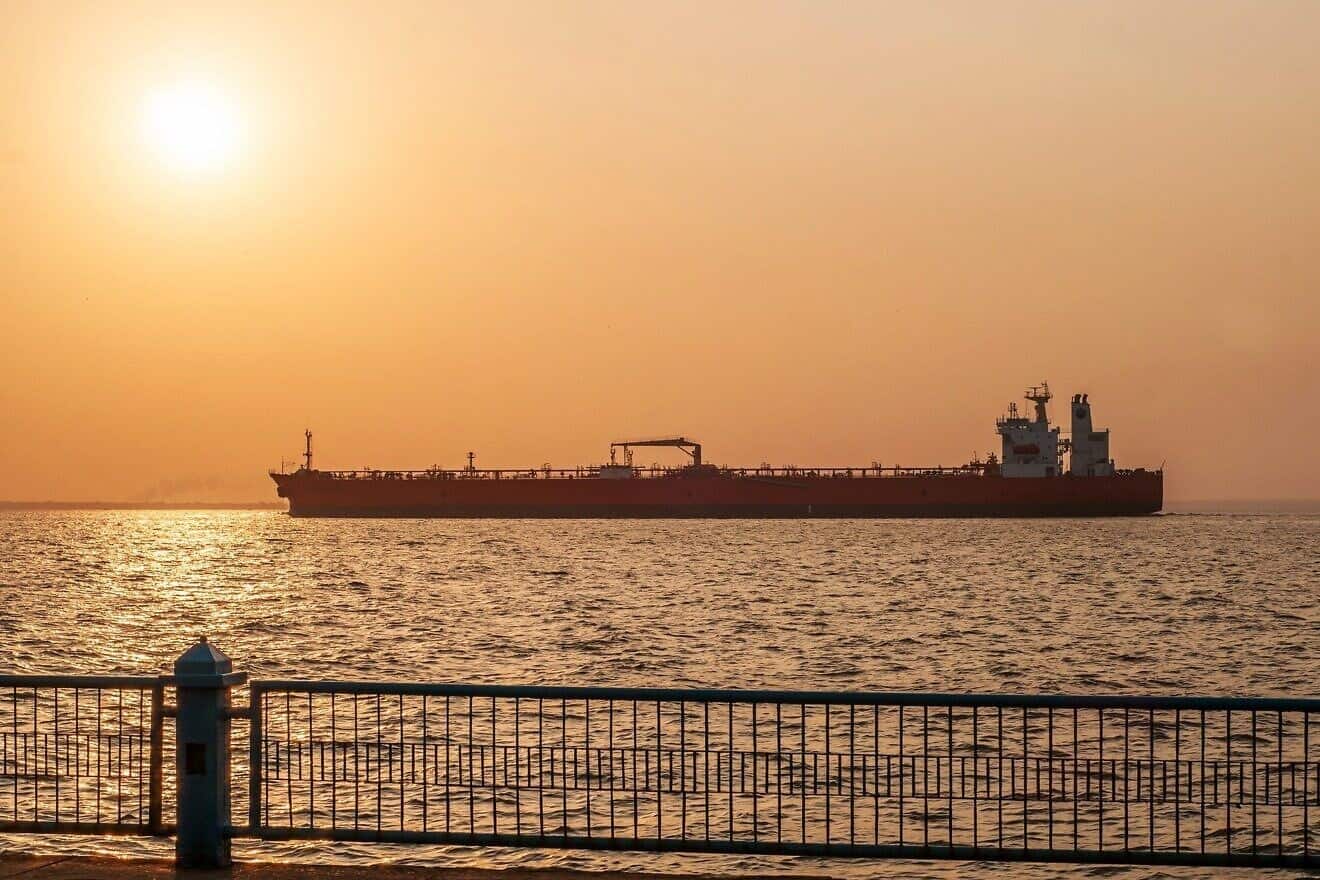
Russia ships a chemical to Venezuela. Iran helps Venezuela turn that chemical into something it can sell. Venezuela sells oil to China. China pays with loans and political cover. For years, these four powers quietly built an energy network designed to operate beyond America’s reach.
On Saturday, the United States attacked it.
The capture of Nicolás Maduro, who has been president of Venezuela since 2013, is being covered as several separate stories: a drug war in the national security press, an oil grab in the energy pages, a Monroe Doctrine revival in the foreign-policy journals. These are not separate stories; they are one supply chain. Seeing it clearly changes what we understand the United States to be doing, and what it means for great power competition from Caracas to the Taiwan Strait.
Start with something most people have never heard of: naphtha.
Venezuela sits on the largest oil reserves on earth, 303 billion barrels. But Venezuelan crude is not like Saudi crude. It is heavy, thick, almost like tar. At room temperature, it barely moves. You cannot pump it through a pipeline. You cannot load it onto a tanker. It just sits there.
To make Venezuelan oil flow, you need to thin it. The substance that does this is called naphtha, a thinning agent. Mix naphtha into heavy crude, and suddenly, it moves. Skip the naphtha, and Venezuela’s entire oil industry stops.
Venezuela cannot produce enough naphtha on its own. It must import it. For decades, that import relationship ran north.
American oil companies built Venezuela’s petroleum industry. Gulf Coast refineries in Texas and Louisiana were engineered specifically to process Venezuelan heavy crude. Until 2019, the United States was Venezuela’s largest customer. The infrastructure, the expertise, the market: all American.
Then came sanctions. Washington cut off purchases and banned U.S. companies from supplying naphtha. The assumption was that Venezuela’s oil industry would collapse. It did not. Four American adversaries stepped in to keep it running, and in doing so, built something new.
Here is how the network works.
Russia supplies the naphtha. As American sanctions tightened on Iranian shipping, Moscow found a new customer just as Europe stopped buying Russian energy. According to Lloyd’s List, Russian naphtha cargoes have been arriving in Venezuelan ports even as other sanctioned vessels turned back.
Iran provides the refining capacity. Tehran has helped Caracas build and repair refineries, increasing Venezuela’s storage and processing capability. The two countries share shadow tanker networks to evade sanctions. And Iran has used Venezuela as a platform for something else: Last week, the U.S. Treasury Department sanctioned a Venezuela-Iran network for facilitating millions of dollars in combat drone sales. Iranian Mohajer drones are now reportedly being assembled on Venezuelan soil.
China receives the oil. Roughly 80% of Venezuelan crude exports flow to Beijing, much of it shipped as repayment on tens of billions of dollars in loans extended over the past decade. For China, Venezuelan oil offered something strategically valuable: a stable supply outside the Middle East, beyond the chokepoints of the Strait of Hormuz and the Strait of Malacca, insulated from American naval interdiction.
Russia provides the input. Iran provides the infrastructure. China provides the market. Venezuela is the junction where all three lines cross. And all four benefit from a system designed to operate beyond Washington’s reach.
That is the network the United States just struck.
The Trump administration’s National Security Strategy, released in December, makes the logic explicit. The document revives the Monroe Doctrine under what it calls a “Trump Corollary,” declaring that the United States will deny non-hemispheric competitors access to strategic assets in the Americas. Read plainly: The Western Hemisphere is ours, and rivals will not be permitted to build infrastructure here that undermines American power.
Venezuela was exactly that infrastructure. The implications extend far beyond Latin America. For Russia, Venezuela had become a growing market for energy exports as European customers disappeared. That market is now at risk.
For Iran, Venezuela was a Western Hemisphere platform—a place to build weapons, launder money and project capability near the American homeland. That platform is now compromised.
For China, Venezuela was the answer to a strategic vulnerability. Beijing’s nightmare scenario is a conflict over Taiwan in which the United States interdicts Chinese energy supplies transiting the Pacific. Venezuelan oil, flowing across the Atlantic and paid for in yuan and infrastructure, was supposed to be the hedge. That hedge is now gone.
And this brings us to Taiwan.
By seizing the Venezuelan node, the United States has made China more dependent on the energy routes it was trying to diversify away from—routes that run directly through waters where American naval power is concentrated. The Taiwan Strait and the South China Sea just became more important to Chinese energy security, not less.
The drug-trafficking designation provided legal authority and domestic political support. Maduro is a documented narcotics facilitator, and the U.S. Department of Justice indictments are legitimate. But the strategic logic of this operation extends far beyond counter-narcotics.
This was a strike in a new kind of great power competition—one fought not on battlefields but through supply chains, not with divisions but with shipping routes and the inputs that keep hostile infrastructure running.
Naphtha flows from Russia to Venezuela. Oil flows from Venezuela to China. Drones flow from Iran to Venezuelan airfields. The money loops back through shadow networks to all of them.
American companies built Venezuela’s oil industry. American adversaries captured it. The United States just took it back.
Now we will see what breaks.


1 comment:
I believe we will soon be hearing about Panama.
Post a Comment