After Caracas, Tehran trembles
From Venezuela to Iran, the geopolitical map of the war against democracies is being redrawn and the jihadist axis faces collapse.
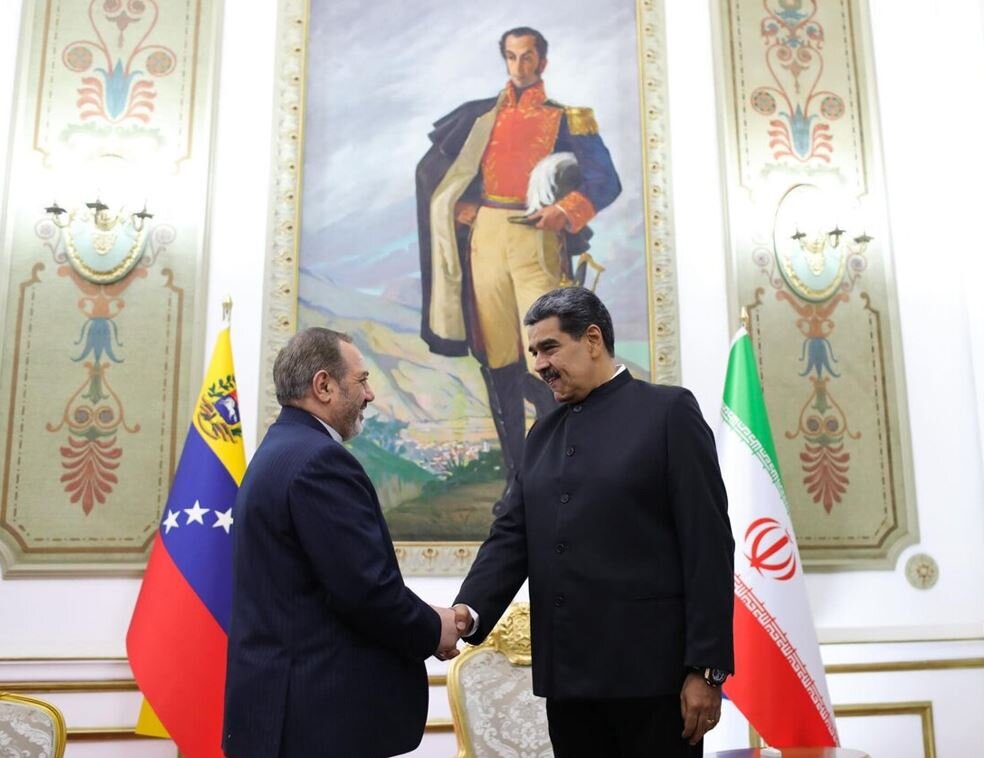
Iranian Defense Minister Brigadier General Aziz Nasirzadeh met with Venezuelan President Nicolas Maduro to foster closer ties between the two nations during the 10th meeting of the Iran-Venezuela Joint Economic Cooperation Commission in Caracas on November 21, 2024.
After the U.S. bombing of Caracas over the weekend, eyes in Tehran, Moscow and Beijing are now fixed on the skies. As Venezuela’s captured president, Nicolás Maduro, edges toward judgment, the intercontinental battlefield between the West and its enemies is being fully exposed.
The most intricate web runs between Tehran and Caracas: a jihadist axis intertwined with drug trafficking, generating enormous revenues and securing strategic positions for a war against democratic societies. This is not conjecture. It has been built methodically for some two decades.
The timing of U.S. President Donald Trump’s strike—on the anniversary of the killing of Qasem Soleimani—was deliberate. Soleimani was the architect of Iran’s transoceanic Shi’ite strategy, with Hezbollah as its spearhead. Historian David Wurmser is right: this marks a revival of a Monroe Doctrine logic—defense through decisive action.
The poles today are Maduro’s Venezuela and Ali Khamenei’s Iran. Trump’s warning (Shoot protesters and the United States “will come to their rescue”) was unprecedented— and today its meaning is clear.
The alliance dates back to 2005, when Iran’s President Mahmoud Ahmadinejad visited Venezuela at the invitation of its president, Hugo Chávez. From that moment, Venezuela became a hub where jihadist politics merged with narcotrafficking. Hezbollah embedded itself across Latin America, from money laundering to antisemitic terror and paramilitary training, including on Margarita Island.
In 2022, as Iranian women were being slaughtered during the “Woman, Life, Freedom” uprising, Venezuela secretly allocated one million hectares of land to Iran. Officially agricultural. Strategically, a forward operating base at America’s doorstep.
Today, the axis is cracking. Maduro faces prosecution. Hezbollah is weakened and trapped, even as it dreams of resuming war against Israel alongside Hamas. Inside Iran, more than 20 cities burn. Students, women and workers confront the regime’s armed guards. The Islamic Revolutionary Guard Corps fires, but the people no longer submit.
Iranians are starving while their rulers invest in jihad and missiles. After humiliation and failure, contempt for the regime grows. The chants—invoking Reza Pahlavi and calling for Khamenei’s downfall—are unmistakable.
If the Venezuelan regime collapses and Iran follows, the consequences will be global. China protests. Russia fumes. The United Nations will issue its familiar condemnations. But history will have turned a page.
As American broadcaster Mark Levin observed, such a moment would resemble the fall of the Berlin Wall—a victory over totalitarianism greater than any prize.


1 comment:
"Make Venezuela Great Again"
Post a Comment