Tucker’s house in Qatar
Christians in the Gulf state live under a system that international labor experts identify as meeting the criteria for forced labor and modern slavery.
By Charles Jacobs and Ben Poser
JNS
Jan 13, 3036
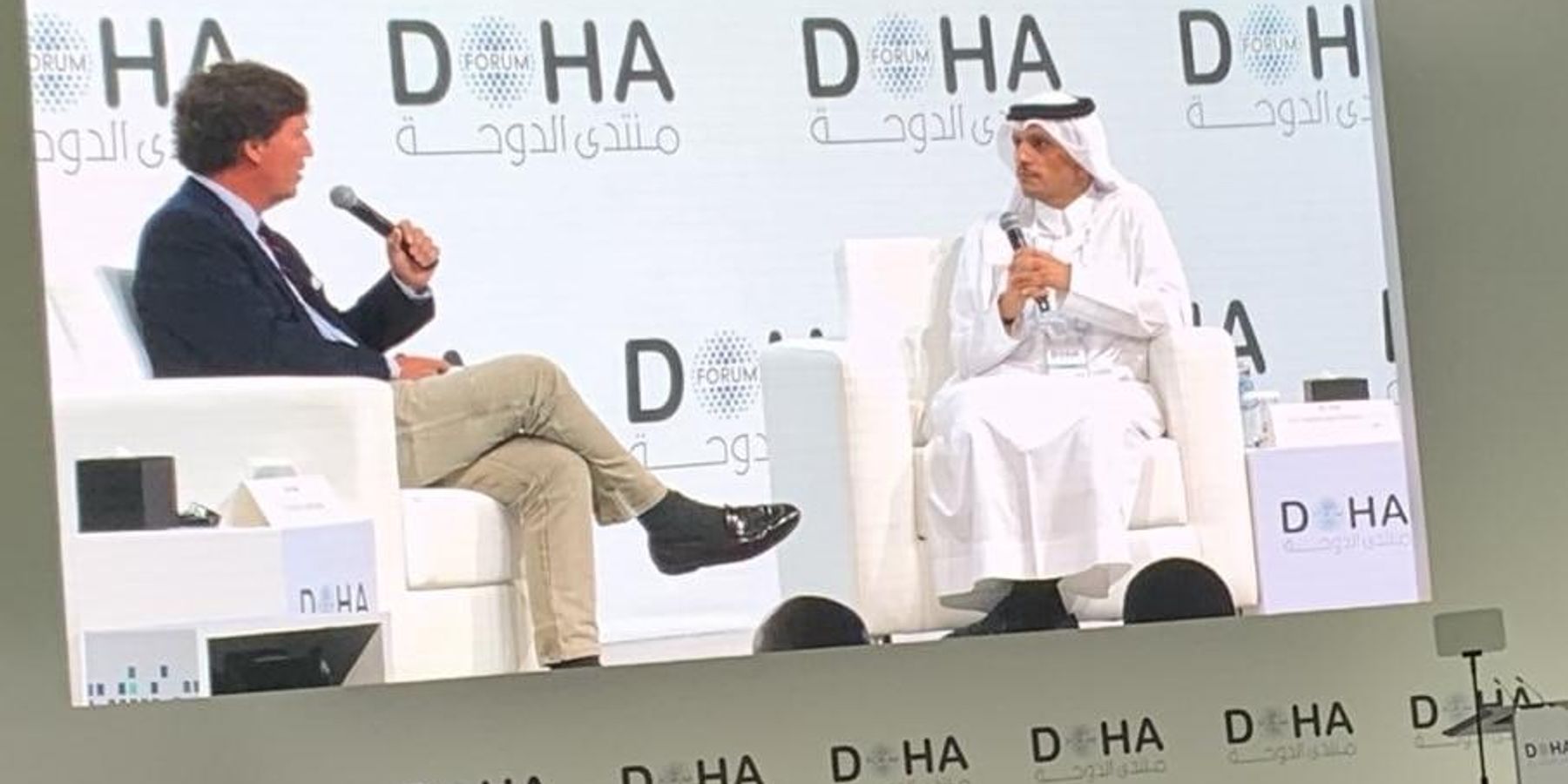
Reveals Plan To Buy a Home in Qatar
Tucker Carlson has been won over by Qatar. He now touts the country to his millions of social media followers and, no doubt, to his friends in the White House.
Some people get a lot of money from Qatar to do that sort of work. Four former congressmen, including two Democrats and two Republicans, are each getting paid $80,000 a month to lobby for Qatar.
American universities get pallets of money from Qatar, too—perhaps as much as $100 billion since 2000—to teach students anti-Jewish, anti-American propaganda in their classrooms. And Carlson is actually buying a house in Qatar. It would be interesting to see how much, if anything, he had to pay for it.
Recently, the former Fox News host and current podcaster told his huge audience that more Christians live in Qatar than in Israel. It’s true: There are around 381,000 Christians in Qatar and only about 184,000 in Israel. The problem for Carlson is that Christians in Qatar are, for all practical purposes, modern-day slaves.
They are almost entirely migrant laborers, primarily from South and Southeast Asia, places like Bangladesh, India, Nepal, the Philippines and Sri Lanka. Unlike Christians in Israel, they are not citizens. They cannot vote, cannot be naturalized, are increasingly surveilled and persecuted, and have no meaningful political rights. They have suffered staggering losses, including thousands of unexplained deaths linked to heat stress, unsafe conditions and exhaustion. They don’t live in Qatar as members of society but as cheap, low-paid labor—disposable and tightly controlled. They can never be sure they will get paid, as their bosses frequently steal their wages.
They live under the kafalah (“sponsorship”) regime, a system that international labor experts repeatedly identify as meeting the criteria for forced labor and modern slavery.
These people are bound to employers, stripped of passports, and threatened with detention or deportation if they attempt to leave, protest or even complain. Many must borrow large amounts of money at high interest rates to cover their own recruiting fees—sometimes amounting to a year’s wages, pressing them deep into debt.
Qatar announced far-reaching labor reforms in 2020. However, the truthfulness of their pledges, including paying millions in compensation to workers, is highly suspect, with Human Rights Watch accusing the government of “backsliding” on its promises.
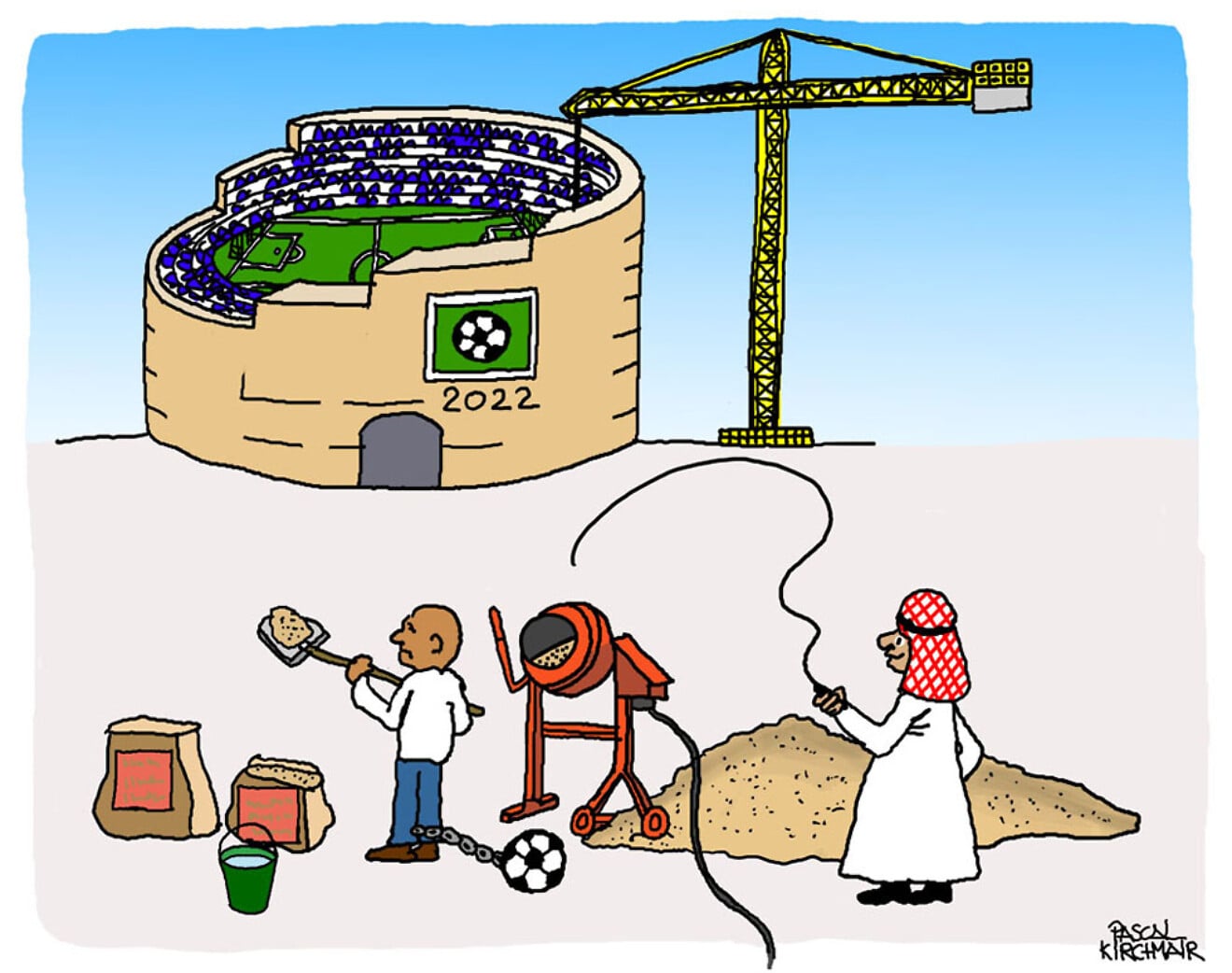
Qatar is practically a slave state. Slave labor, infamously, built the grandiose soccer stadium and facilities for the 2022 FIFA World Cup games. The Qatari government’s own records show that 15,799 laborers died across the whole country between 2011 and 2020.
Migrant workers make up an astonishing 91% of the total population of Qatar, with the number of laborers estimated at perhaps 2 million. How can Carlson not know that the country is a prison bulging with slaves?
While this system exploits workers from across Asia and Africa, African workers—from Ethiopia, Ghana, Kenya, Nigeria, Sudan and Uganda, among other countries—are among the groups facing racialized discrimination layered atop the same coercion.
African men working in construction, security and cleaning. Women employed as domestic workers. Both sectors are routinely subjected to some of the harshest conditions: unpaid wages, overcrowded or uninhabitable housing, confiscated documents and retaliation for speaking out. One documented case concerns 17 East African men trafficked to Qatar and left without pay or food. They were then taken to a government “shelter,” where they were interrogated as to their associations, had their passports stolen, and were later deported.
One rare African voice pierced this apartheid-like system: Malcolm Bidali, a Christian migrant from Kenya who wrote anonymously about life inside Qatar’s labor regime. He described what thousands of African workers experience in Qatar, but few can safely articulate. Excessive working hours, restricted movement, fear of punishment and the knowledge that one’s legal existence depends entirely on employer approval. When his identity became known, Bidali was arrested and detained. His offense was his testimony. His case matters precisely because it is traceable; most victims remain invisible.
This is the reality behind Qatar’s polished image as a modern, tolerant state—an image amplified by paid lobbyists, Western universities, think tanks, and, more recently, prominent media figures willing to repeat regime talking points. Even, as in this case, if it means covering up the crime of human bondage.
Christians do not live as free men and women in Qatar, as Carlson has implied. Indeed, he should not be surprised to find that the person who will be cleaning his new house there is a black Christian slave woman.


1 comment:
When in Rome.......
Post a Comment