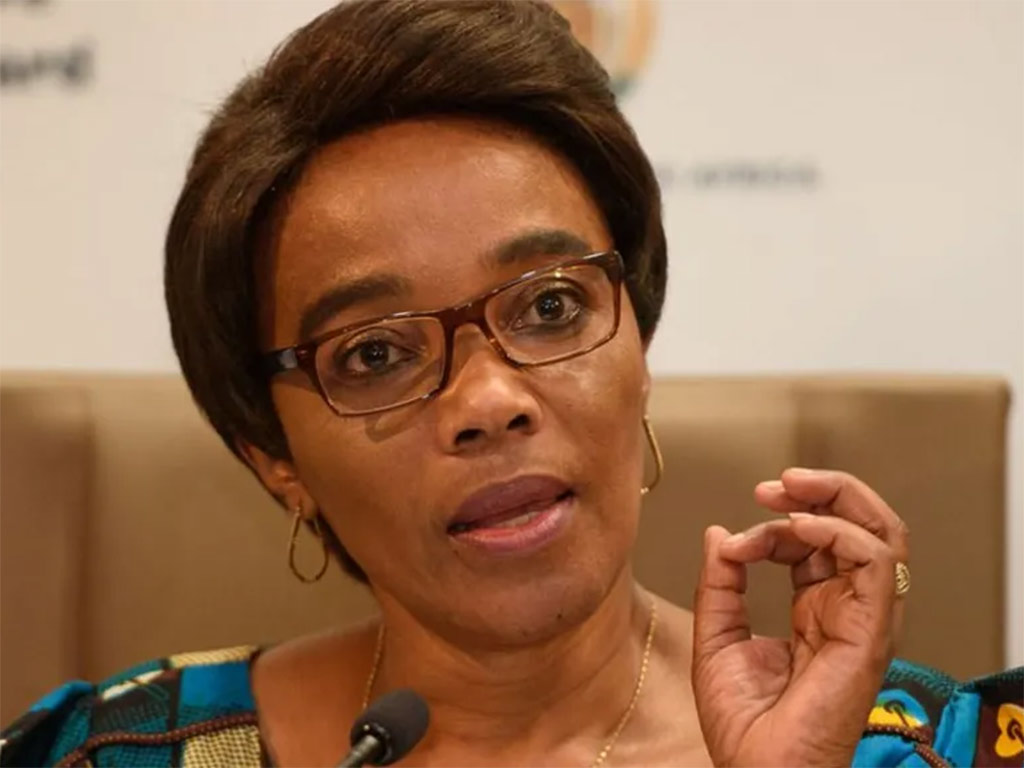
The optics of a minister charged with
defending women addressing an event celebrating the Islamic Revolution
are not merely baffling; they are grotesquely inconsistent with South
Africa’s own constitutional commitments to dignity, equality and
freedom.
For years, the ruling African National
Congress has tried to position itself as a principled defender of human
rights. But that veneer cracks instantly when it comes to foreign
policy—from carefully calibrated abstentions at the United Nations to
this latest public embrace of Tehran.
Just last month, South Africa found itself
in international headlines when Iranian warships were invited to
participate in naval exercises off its coast. The move sparked intense
domestic and diplomatic pushback, including from President Cyril
Ramaphosa himself.
The confusion and backtracking that
followed was symptomatic of an ANC foreign policy increasingly guided by
ideological camaraderie rather than principle.
At the same time, Western democracies have
moved in the opposite direction. The European Parliament has repeatedly
called for Iran’s Islamic Revolutionary Guard Corps (IRGC) to be
designated as a terrorist organization. The United States already
classifies it as such, underscoring how far Pretoria’s diplomatic
posture is drifting from many of its traditional international partners.
And now, a cabinet minister stands and
celebrates a regime whose own citizens are risking (and, in many cases,
losing) their lives to oppose it.
For readers unfamiliar with life on the
ground in South Africa, this is not a rhetorical crisis. It is a human
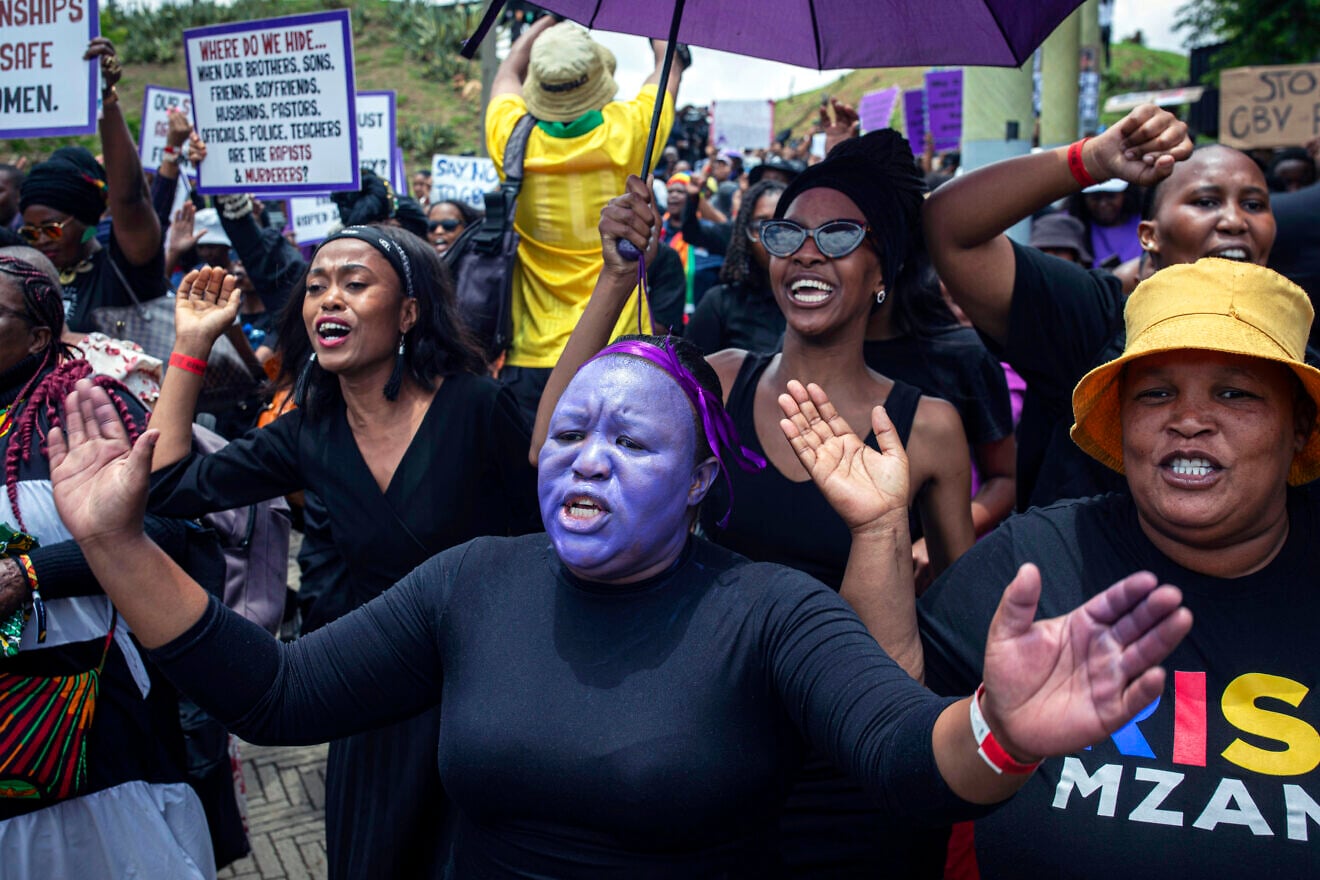
catastrophe. Gender-based violence in South Africa has reached
staggering proportions. Women are killed, assaulted and violated at
rates that place the country among the most dangerous places in the
world to be female. Civil society organizations, police officials and
even government leaders have repeatedly sounded the alarm, with
Ramaphosa himself declaring it a national emergency in November.
Meanwhile, services for survivors remain
under-resourced. Prosecution rates are abysmally low. Shelters are
overcrowded. Trust in the system meant to protect women is fraying.
As all of this unfolds in South African
townships and suburbs, we now have a minister who, in the name of
diplomatic courtesy, takes the stage to laud a government accused of
similarly brutal suppression of women’s rights.
There were signs that this event would be
controversial even before it began. A local Iranian South
African—speaking on condition of anonymity due to threats and harassment
they and their community have faced—told me that some 300 Iranians in
South Africa attempted to email and call the Maslow Hotel to register
their concerns ahead of the commemoration. According to this source, not
a single email was acknowledged, and phone calls were ended abruptly by
front-desk staff.
Whether through bureaucratic dismissal or
deliberate avoidance, the result was the same: The voices of people who
fled repression were left unheard, ignored and unwelcome in a country
that once proudly presented itself as a sanctuary for the persecuted.
And yet, a South African government
official stood publicly celebrating the very revolutionary movement
under whose authority countless Iranians, particularly women, students,
religious minorities, journalists and activists, have faced repression
so severe that even health-care workers have reportedly been jailed or
killed simply for treating wounded protesters.
Moments like this expose a foreign policy
increasingly shaped by ideology rather than principle—one that is
steadily eroding the moral authority South Africa once commanded on the
global stage.
There was a time when South Africa’s
foreign policy was grounded in human rights, not opportunism. South
Africa once stood on the world stage with a legitimacy born of its own
struggle against apartheid. It became a moral authority earned through
sacrifice and resilience. Today, that authority is being squandered in
diplomatic routines that align the country with regimes accused of the
very abuses its Constitution rejects.
International audiences reading about last
week’s event will not see routine diplomatic engagement. They will see a
senior cabinet minister publicly celebrating a regime widely criticized
for its violations of women’s rights. They will see a country
struggling to protect its own women while appearing willing to
legitimize regimes that suppress them abroad. They will see a foreign
policy that sacrifices principle on the altar of ideological affinity.
And they will ask a question South
Africans themselves are increasingly forced to confront: What does South
Africa stand for anymore? For many women who live there and for
millions watching from outside the country, the answer is becoming
deeply uncomfortable.
And that should alarm every one of us.


1 comment:
South Africa is a crime ridden shit hole.
Post a Comment